Chinese Satellite Breaks Apart in Rare Orbit That Could Hold Debris for Centuries
The Breakup
Yaogan-50 generated a large field of debris in a highly retrograde orbit. A reconnaissance satellite suffered an unidentified anomaly and broke apart into pieces. Now, those fragments are trapped in a high altitude above Earth, where they risk a head-on collision with another object.
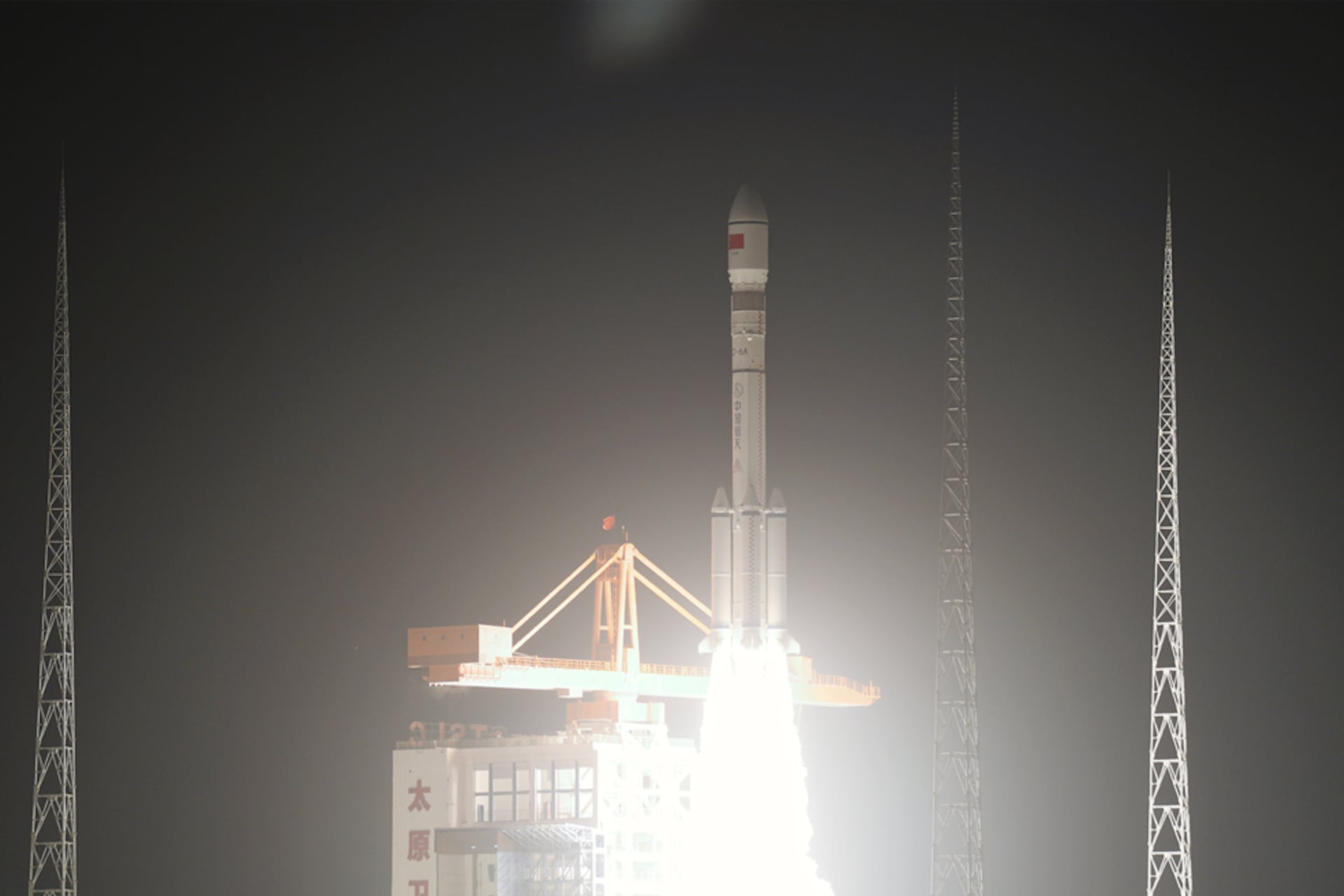
China’s Yaogan-50 (02) satellite launched on March 15, 2026, on board a Long March 6A rocket. The satellite successfully reached its operational orbit-a highly retrograde orbit, meaning that it travels in the opposite direction of Earth’s rotation at an altitude of approximately 590 miles (952 kilometers). A few months into its mission, however, the satellite appears to have malfunctioned. On September 4, the U.S. Space Force cataloged 43 debris objects from the breakup of Yaogan-50 (02), according to Jonathan McDowell, a former astrophysicist at the Harvard-Smithsonian Center for Astrophysics who tracks space activity.
Debris Altitude and Inclination
The satellite’s fragments are currently at an altitude range between 372 and 683 miles (600 and 1,100 km) above Earth’s surface. The pieces remained within the satellite’s distinctive 142-degree inclination orbit. At that altitude, the resulting debris will likely stay in orbit for a long time.
Orbital Decay and Collision Risk
Debris that’s left in orbit below 372 miles (600 km) normally falls back to Earth within a few years due to atmospheric drag. The higher the altitude, however, the longer the debris will remain in Earth orbit. For debris that’s orbiting at an altitude of 500 miles (800 km), orbital decay can take centuries, according to NASA. Above 620 miles (1,000 km), the debris can keep circling Earth for thousands of years. There, the fragmented junk risks collision with other spacecraft or orbital debris, which would result in the creation of another debris field.
Causes and Satellite Purpose
The European Space Agency estimates that there have been more than 660 events resulting in fragmentation, including:
- Explosions
- Collisions
- Anomalous events
As it stands, there are currently more than 1.5 million space debris objects in Earth orbit.
It’s not clear what may have caused the Yaogan-50 (02) satellite to break apart, but it may have been a failure of:
- Propulsion
- Battery
...or it may have itself collided with another object or space debris.
The Yaogan-50 is a series of remote-sensing and reconnaissance satellites that China claims is designated for:
- National land surveys
- Crop yield estimation
- Disaster prevention and mitigation
There is speculation, however, that the satellites are used for intelligence and military surveillance, according to SpaceNews.
Comments
No comments yet. Start the discussion.