I chose ChatGPT’s ad-free option so you don’t have to - here’s what you actually give up
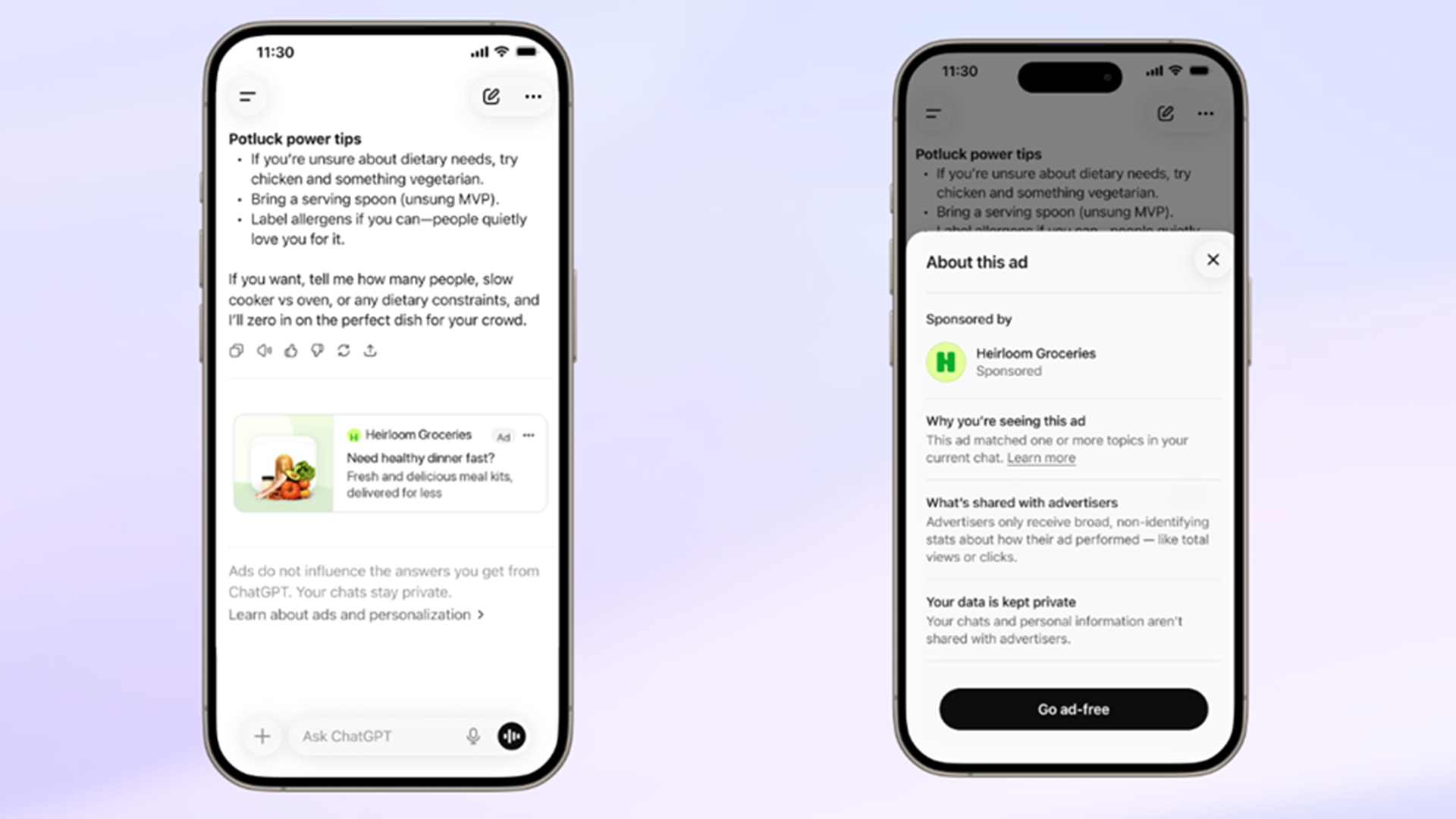
I chose ChatGPT’s ad-free option so you don’t have to - here’s what you actually give up Are you willing to pay the price for ad-free AI? There are plenty of ways to get rid of ads online, but ChatGPT has come up with an unusual approach to the bargain for its own ads. Free ChatGPT users can give up some of their messaging quota to make advertising inside ChatGPT disappear. As OpenAI expands advertising on ChatGPT's Free tier (ads launched in the several countries, including the UK, this week), users can choose an Ads-Free version without upgrading to a paid subscription. The catch is that choosing it means accepting lower usage limits and potentially losing access to some features. It all depends on whether you value an uncluttered chatbot conversation or more opportunities to actually use it. I was curious about what that trade actually amounted to in normal use. An ad appearing underneath a ChatGPT response sounded mildly irritating, but running out of useful interactions halfway through a conversation sounded considerably worse. OpenAI is evasive about precisely what the trade-off is, so I decided to experiment on my own. Ad options I wasn't going to just spam ChatGPT with meaningless prompts until it finally refused to answer. I came up with a fairly common use for the AI and decided to see if having the advertising toggle on or off made much of a difference. To set up the experiment, I started a Free account, opened Settings and the Data menu where the Ads options live. You can see the choices above. ChatGPT encouraged signing up for a subscription to avoid ads, but the ad-free experience “with reduced usage” is right there. I started with ads enabled and asked ChatGPT a bunch of questions about potential purchases, activities to do on the weekend, and other mundane queries, with plenty of follow-up questions as part of it. The ads barely interfered with any of the conversation. OpenAI currently places ads below responses and keeps them visually separate from ChatGPT's answer, as you can see above. They're easy to ignore and never made an answer harder to read. It felt more like a sponsored Google result than an unskippable video in terms of annoyance levels. Sign up for breaking news, reviews, opinion, top tech deals, and more. Still, I never had to wonder whether ChatGPT itself was recommending the advertiser. That's good for OpenAI since it's a particularly awkward environment for advertising. When a chatbot is telling you what restaurant to visit, which laptop to buy or how to plan a vacation, even the suggestion that money could influence its answer would undermine the entire experience The price of silence The ad-free option felt pretty similar to the version with sponsored posts. You'd have to actually be watching for the ads to have much of an impact. OpenAI only says Ads-Free users receive fewer messages per day, may run into rate limits more often, and can lose access to tools like deep research or its image-making options. I noticed the reduced feature option, but multiple attempts to reach the ad-free limit had mixed results. It took nearly 40 messages to get a warning from ChatGPT in one instance, and another experiment crossed 60 messages without a peep from the chatbot. The rate limit may matter a lot more for people using ChatGPT professionally. But when it comes to regular conversations that aren't as extensive, I didn't really feel constrained. Not to mention, even if you do hit the ad-free ceiling, you can always turn the ads back on to get more access. My verdict? As much as I might prefer an ad-free ChatGPT conversation, I'd rather deal with the easily forgettable sponsored links than having to start all over with the toggle flipped back on. Slightly more clutter around the conversation beats possibly having to start over because I hit the rate limit. Follow TechRadar on Google News and add us as a preferred source to get our expert news, reviews, and opinion in your feeds. ➡️ Read our full guide to the best business laptops 1. Best overall: Dell 14 Premium 2. Best on a budget: Acer Aspire 5 3. Best MacBook: Apple MacBook Pro 14-inch (M4) Eric Hal Schwartz is a freelance writer for TechRadar with more than 15 years of experience covering the intersection of the world and technology. For the last five years, he served as head writer for Voicebot.ai and was on the leading edge of reporting on generative AI and large language models. He's since become an expert on the products of generative AI models, such as OpenAI’s ChatGPT, Anthropic’s Claude, Google Gemini, and every other synthetic media tool. His experience runs the gamut of media, including print, digital, broadcast, and live events. Now, he's continuing to tell the stories people want and need to hear about the rapidly evolving AI space and its impact on their lives. Eric is based in New York City. You must confirm your public display name before commenting Please logout and then login again, you will then be prompted to enter your display name.
Comments
No comments yet. Start the discussion.