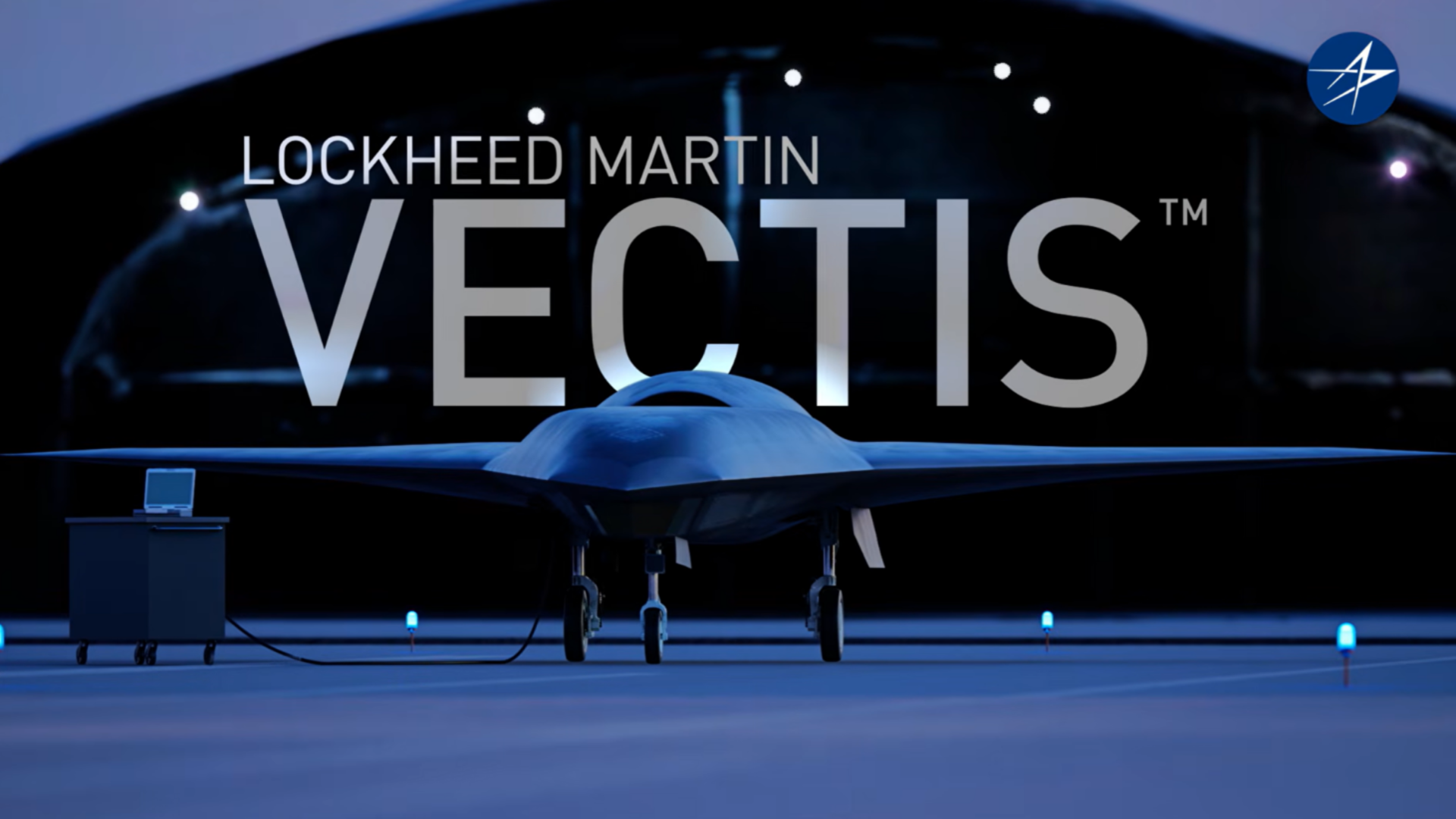
'Engineered for affordability': Lockheed Martin says Vectis stealth combat drone family will come before 2028 - promotion videos show two hidden missile bays
Lockheed Vectis combines autonomous operation, internal weapons storage, and stealth features as Lockheed develops a higher-end CCA for the Air Force.
- After losing Increment 1 to Anduril and General Atomics, Lockheed locks in for Increment 2
- Lockheed Vectis carries its air-to-air and strike weapons inside the aircraft
- Lockheed expects the first Vectis prototype to fly in 2027
- The aircraft measures roughly 34 feet long with a 38-foot wingspan
Vectis reveals internal weapons arrangement
Lockheed Martin has released promotional footage offering a clearer look at Vectis, its proposed stealth Collaborative Combat Aircraft for future operations. The company says the aircraft is intended for autonomous missions alongside crewed fighters, including the F-35 and future combat platforms.
Lockheed expects the first Vectis prototype to fly in 2027, with four additional aircraft now entering development and testing.
New computer-generated imagery
New computer-generated imagery shows a deeply recessed intake above the fuselage, indicating significant attention to the aircraft's signature characteristics.
The footage also depicts Vectis launching AIM-120 missiles and GBU-53 Small Diameter Bomb IIs from internal weapons compartments. Keeping those weapons inside the aircraft allows the illustrated configuration to avoid exposing them on external attachment points during missions.
The arrangement supports the stealth requirements associated with the aircraft, although Lockheed has released few detailed performance specifications for Vectis.
Sign up to the TechRadar Pro newsletter to get all the top news, opinion, features and guidance your business needs to succeed!
The company describes Vectis as an autonomous aircraft capable of operating independently or cooperating with crewed aircraft during demanding missions. It also displayed a full-scale mock-up measuring about 34 feet long with a wingspan of approximately 38 feet.
Those dimensions establish the physical size of the aircraft, while important information about propulsion, payload and other systems remains undisclosed.
Ron Fehlen, Lockheed Martin vice president and general manager of Skunk Works, said the design responds to demanding customer requirements.
“The technical specs, as you can imagine, are designed to meet and, in some cases, exceed the customer sets that we are working with and their requirements and their mission needs,” said Fehlen.
Affordability remains central to the Increment 2 effort
Lockheed claims the aircraft is survivable, affordable, and adaptable across different missions, without disclosing its projected production cost.
“Engineered for affordability and built for survivability, it delivers the flexibility today’s operational environment demands. This is the future of airpower, built the Skunk Works way.”
Lockheed said.
Increment 2 development and requirements
Vectis is being developed for the Air Force's Increment 2 requirement after Lockheed lost the earlier Increment 1 competition.
For Increment 1, the Air Force selected Anduril's FQ-42 and General Atomics' FQ-44 rather than Lockheed's earlier, more expensive aircraft proposal.
Lockheed reduced complexity and cost while continuing development of a more capable stealth-oriented aircraft for Increment 2.
The Air Force's requirements for Increment 2 remain under development, leaving the eventual balance between affordability, survivability and capability unresolved. Earlier Increment 1 requirements called for more than 700 nautical miles of combat radius, while the later requirement could demand greater performance.
The lower costs could involve simpler stealth features and shorter-lived engines using manufacturing methods such as 3D printing. A more demanding combat role, however, could require expensive propulsion, advanced avionics and sophisticated measures for reducing detectable signatures.
That combination leaves Vectis within an acquisition programme where the eventual technical requirements and preferred cost level remain unsettled.
Follow TechRadar on Google News and add us as a preferred source to get our expert news, reviews, and opinion in your feeds.
Efosa has been writing about technology for over 7 years, initially driven by curiosity but now fueled by a strong passion for the field. He holds both a Master's and a PhD in sciences, which provided him with a solid foundation in analytical thinking.
You must confirm your public display name before commenting.
Please logout and then login again, you will then be prompted to enter your display name.
Comments
No comments yet. Start the discussion.