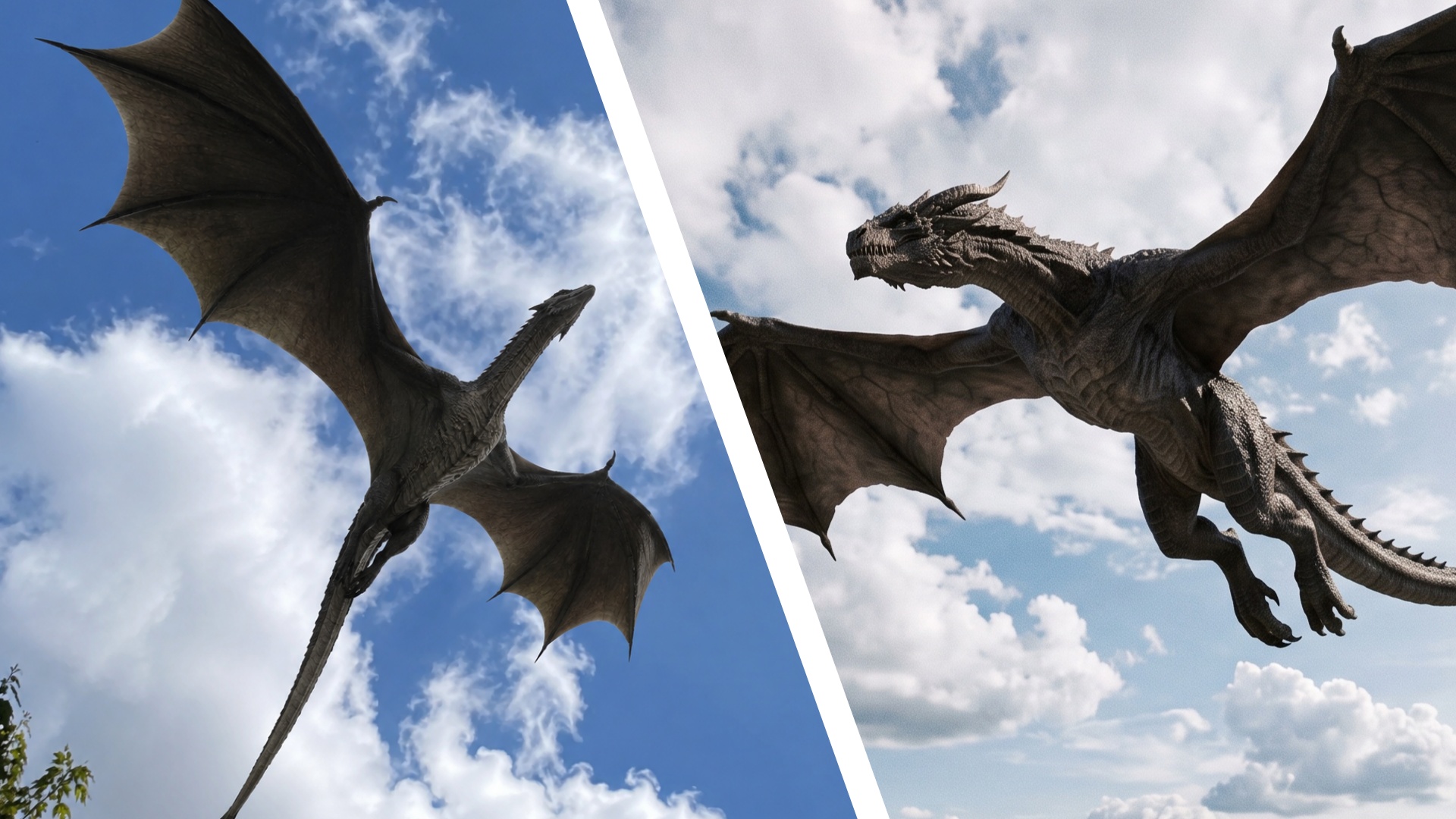
‘The noise patterns are awful’ - some Reddit users aren’t happy with the new ChatGPT Images 2.5, so I did my own tests and have to agree
‘The noise patterns are awful’ - some Reddit users aren’t happy with the new ChatGPT Images 2.5, so I did my own tests and have to agree There's some synthetic fuzz obscuring the sharpest images OpenAI launched ChatGPT Images 2.5 this week, boasting of impressive upgrades to the AI image creator. The company says its latest model delivers sharper details, more natural lighting, and richer textures, while doing a better job of preserving people and objects from reference photos. It is also supposed to generate images up to 50% faster and follow complex visual instructions more reliably. There are plenty of genuinely useful additions around it, too. Images 2.5 introduces Sketch for turning rough drawings into finished images, templates for things such as posters and product photography, and the ability to leave comments directly on an image when requesting edits. OpenAI calls it its new state-of-the-art image model, which is a reasonably high bar to set for something that inevitably ends up being asked to draw dragons before breakfast. The early reaction, though, is much less tidy. One Reddit user delivered perhaps the most memorable review so far: “The noise patterns are awful”. Another looked at an AI generation and decided, “This…looks terrible.” The complaint is easy to understand. It's all about the fuzz Everything is sharper, including the problem Noise is a slightly slippery criticism when talking about AI images. In photography, it usually means the speckling or grain that creeps into an image with a poor match between lighting and photographic technique. But generative AI images can produce something similar without ever encountering a camera. Everything gets a gritty, sandy look, and nothing looks clean for some reason. Noise is especially damaging because it can masquerade as detail. Generative models have learned that photographs contain grain, texture, tiny variations in color, and the occasional imperfection. Images 2.5 appears unusually eager to reproduce those signals, sometimes scattering them across skies, skin, feathers, and studio backdrops. That's the opposite of the “sharper details” and “richer textures” promised by OpenAI. Despite emphasizing more natural lighting and textures, some users think ChatGPT Images 2.5 has moved backward. “They need to get rid of these noisy artifacts. It makes it mostly useless for production,” one wrote. There is praise mixed in with the complaints, but it's far from the universal acclaim OpenAI would likely prefer. Sign up for breaking news, reviews, opinion, top tech deals, and more. I wanted to see whether the problem survived outside Reddit screenshots, so I tested a few images with highly detailed subjects and areas that should remain visually smooth to see if any graininess crept in. I even made sure in my prompts to ask for smooth gradients and the elimination of any visual noise. I started with a picture of a mug in a photo studio. The peacock, flowers, fruit, and landscape wrapped around the virtual ceramic are impressive at first. Look closer, however, and the grey studio background has a persistent granular texture, while some of the smallest patterns begin to dissolve into a mess. The model has generated a great deal of visual information without always deciding which parts deserve clarity. A similar issue occurred when I asked for a barn owl at twilight. The feathers are a perfect excuse for complexity, and Images 2.5 handled them well. Individual structures remain visible across the wings and face, the talons are convincing, and the animal avoids the plasticky quality that older AI wildlife images often had. Behind it is a sky that should have been the visual equivalent of a clean sheet of paper. Instead, the smooth blue area has obvious fine grain across it. It doesn't ruin the picture, but once I noticed it, I couldn't stop noticing it. Mythical grain I thought a fantasy scene might fare better as the model wouldn't be relying on actual photographs of a winged horse or dragon. But while they coexist with a rainbow at an alpine lake in a surprisingly coherent composition, the issue is visible immediately. The relentless crispness gives the picture the air of a video game loading screen. The pale-blue sky has a faint textured quality rather than the completely clean gradient I would expect from an ideal synthetic image, while the mountains, trees, and creature details have a crunchy, heavily sharpened look when examined closely. It is nowhere near a disaster, but the image feels like an overprocessed photograph. I was very impressed with how my request for two friends on a rooftop in the evening came out. It came closest to selling the promised leap in realism, with convincing expressions and what seems like real gravity affecting their clothes. But if you look for more than a minute, the grain creeping across the twilight sky and their hair and skin is glaringly obvious. That's especially the case since there was no poorly set lighting or malfunctioning camera sensor. If the twilight sky looks grainy, the grain is a creative decision or model artifact rather than the unavoidable physics of taking a photograph in bad light. Judging these four images specifically on image cleanliness, I have to side with the Reddit grumblers. There is a persistent fine texture that crops up in skies, studio backgrounds, and low-light areas. Sharper is an easy quality to advertise because it looks terrific in a launch gallery, but it may have been taken to excess, landing some of ChatGPT Images 2.5's results in the uncanny valley. Images 2.5 is fast, adaptive, and often competent, but its fondness for granular texture weakens the realism it is supposed to embody. Perhaps the next upgrade will acknowledge that the most impressive thing an AI image generator can put in part of a picture is essentially nothing. What do you think? Take our poll above to give us your opinion. Follow TechRadar on Google News and add us as a preferred source to get our expert news, reviews, and opinion in your feeds. ➡️ Read our full guide to the best business laptops 1. Best overall: Dell 14 Premium 2. Best on a budget: Acer Aspire 5 3. Best MacBook: Apple MacBook Pro 14-inch (M4) Eric Hal Schwartz is a freelance writer for TechRadar with more than 15 years of experience covering the intersection of the world and technology. For the last five years, he served as head writer for Voicebot.ai and was on the leading edge of reporting on generative AI and large language models. He's since become an expert on the products of generative AI models, such as OpenAI’s ChatGPT, Anthropic’s Claude, Google Gemini, and every other synthetic media tool. His experience runs the gamut of media, including print, digital, broadcast, and live events. Now, he's continuing to tell the stories people want and need to hear about the rapidly evolving AI space and its impact on their lives. Eric is based in New York City. You must confirm your public display name before commenting Please logout and then login again, you will then be prompted to enter your display name.
Comments
No comments yet. Start the discussion.