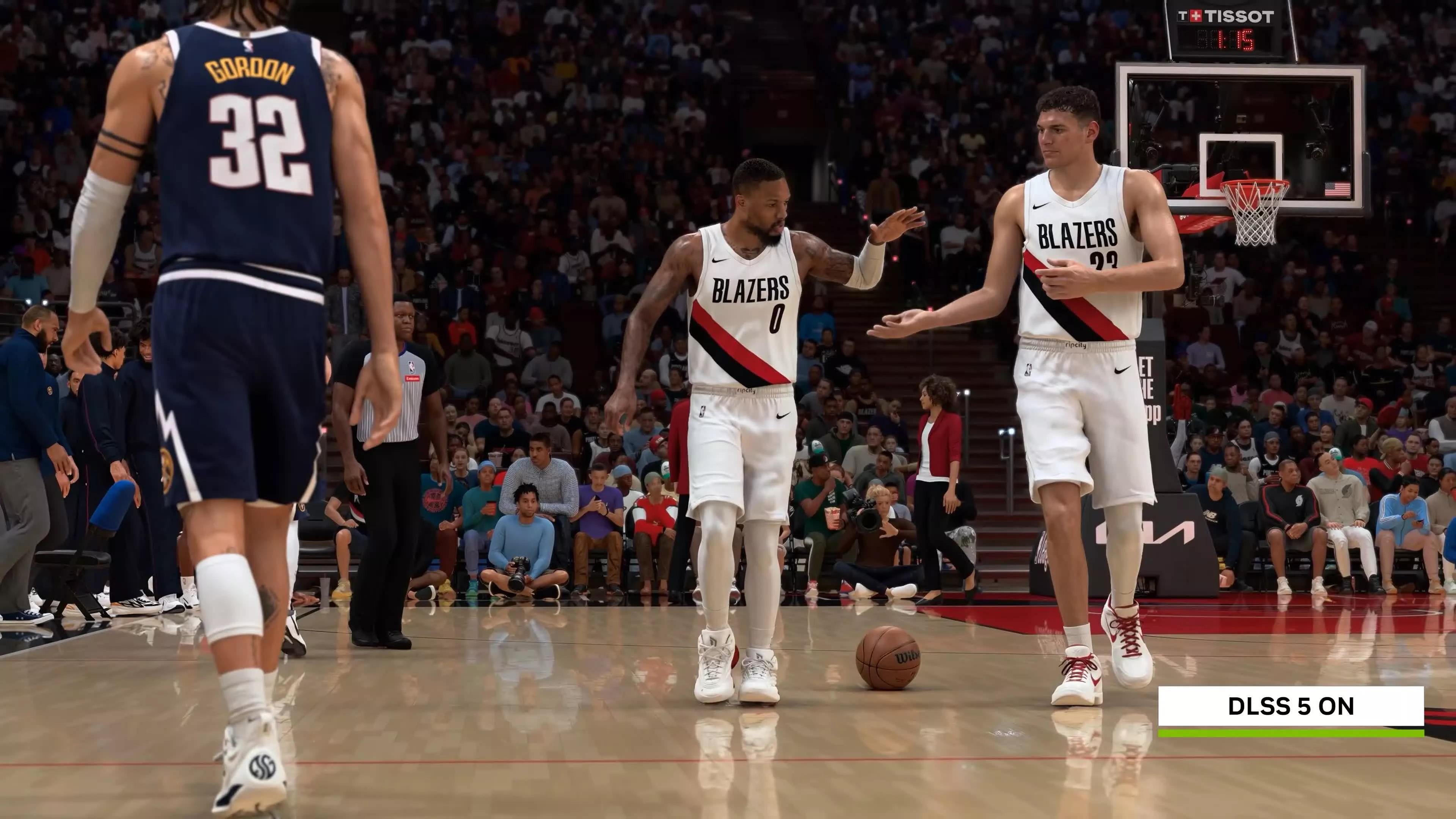
Modders have already found two ways to make DLSS 5 playable, and neither one is Nvidia's
Benchmark results without frame generation
When we benchmarked DLSS 5 across the entire RTX 50 series last week with no frame generation inflating the charts, the numbers were bleak enough on their own. An RTX 5090 fell from 192 FPS to 76 FPS at 4K. An RTX 5060 Ti dropped from 129 FPS to 46 FPS at 1440p. But another key detail was that enabling upscaling brought back a mere 9% in performance, and that's because DLSS 5's neural rendering pass runs after upscaling, on the final output frame, so its cost scales with your monitor's resolution rather than your render resolution.
Running the neural rendering before the upscaler
It's taking the modding community less than two weeks to produce two independent attacks on that problem, with caveats. One moves the neural pass earlier in the pipeline. The other moves it off the graphics card entirely.
The first is Neural Upstream, a ReShade add-on now installable through the DLSS5-Autopilot tool. The idea is a single reordering: instead of render > DLSS Super Resolution > neural rendering at output resolution, it does render > neural rendering at render resolution > DLSS Super Resolution > output. Because the neural network only enhances a frame and never upscales it, running it on the smaller image is where the saving comes from. At 4K with DLSS Quality, the model chews through roughly 2.7 million pixels instead of 8.3 million.
The numbers posted to r/nvidia are striking - even if they don't represent the Nvidia's original take on DLSS 5, it's all about experimentation at this point: on an RTX 4080 in Assassin's Creed Shadows at 4K the feature's cost dropped from roughly 32 FPS to 13 FPS, making the upstream route around 61% faster. Testers have since reported similar behavior in Stalker 2, Cyberpunk 2077, and GTA V Enhanced. OptiScaler has an experimental feature doing something comparable through its own hooking system.
The catch is obvious though. If you feed a neural network less image data, then you get
Comments
No comments yet. Start the discussion.