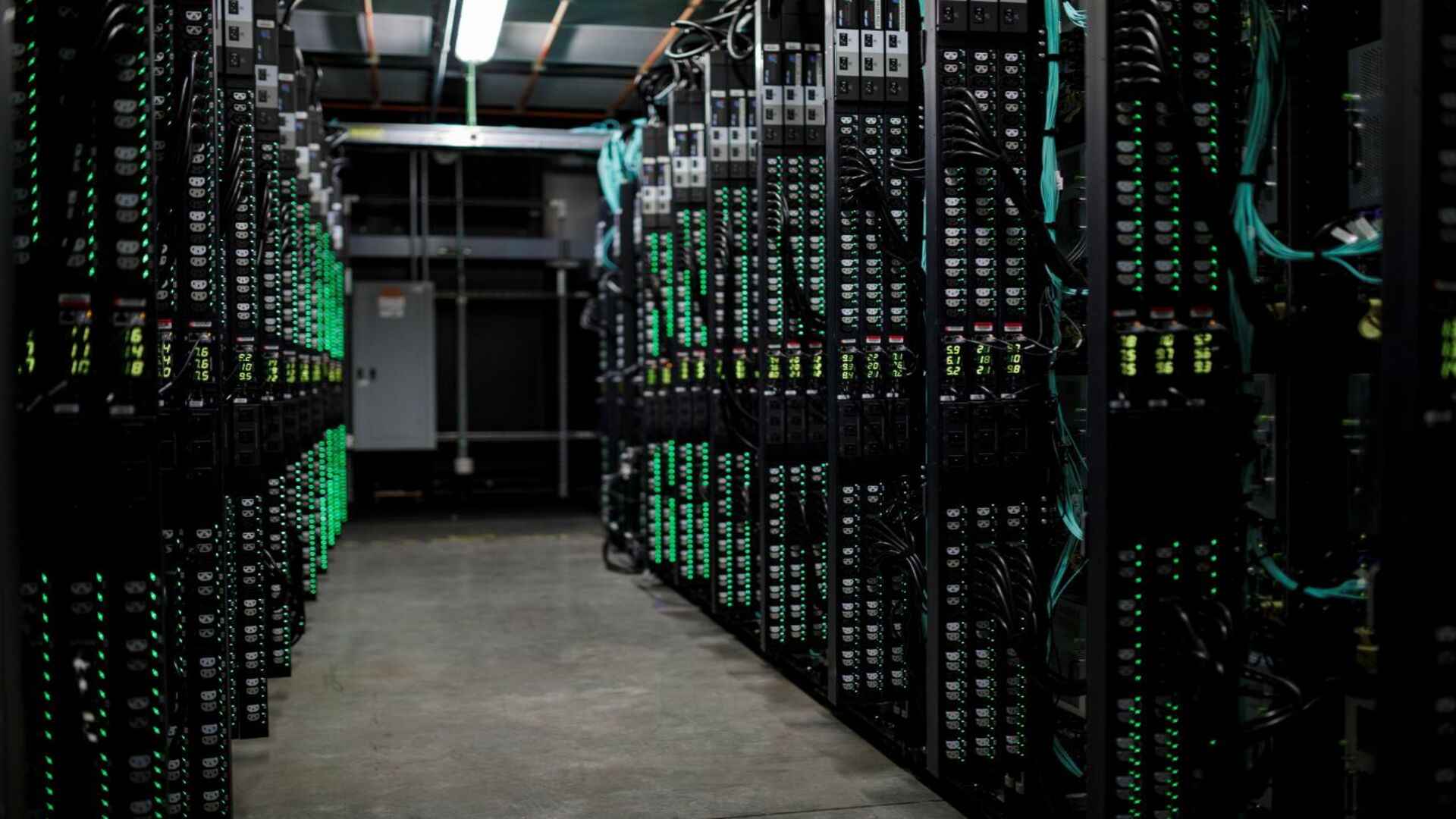
Finally, some good usage - this Danish data center is providing heat to power thousands of household radiators
Finally, some good usage - this Danish data center is providing heat to power thousands of household radiators Data centers usually waste heat, but this Danish firm is taking a different route - Meta’s Danish facility converts server heat into household heating for thousands - Odense uses existing infrastructure to transform wasted data center energy - Heat pumps help raise server warmth to temperatures suitable for homes A data center operated by Meta in Odense, Denmark is channeling its cooling heat straight into nearby homes. Server operations typically send almost all of their electricity out as warmth, with one industry estimate placing that figure near 90%. Most facilities simply vent that energy skyward, but the Odense site routes it through the city's own heating infrastructure instead. How the recovery system actually works Roughly 40% of a data center's total energy consumption goes toward cooling servers, and nearly all of it is released as low-grade heat. That heat arrives too cool for direct use, since server exhaust never reaches temperatures high enough to warm buildings on its own. Water from the municipal district-heating network runs through the facility's cooling units, absorbing that low-level warmth from the servers, and then moves to a nearby plant packed with ammonia heat pumps that raise the temperature further before distribution. Engineering firm Ramboll designed this recovery system for district-heating operator Fjernvarme Fyn, lifting water temperatures between 70 and 75°C. Sign up to the TechRadar Pro newsletter to get all the top news, opinion, features and guidance your business needs to succeed! That range makes the water hot enough for household radiators once it re-enters the wider distribution network. "Our project is relatively unique because we have a very large distribution network," said Jan Strømvig, head of Fjernvarme Fyn, adding Meta placed its facility directly inside that network, allowing highly efficient energy transfer throughout the system. On its part, Meta described the achievement as one of scale rather than any fundamentally new engineering breakthrough. "Heat pumps are not a new invention, nor are coils for capturing heat. What is new and innovative is the pairing of these two in hyper scale," said Lauren Edelman, energy specialist at Meta Numbers vary, but scale remains substantial Ramboll's published figures describe roughly 45 megawatts flowing directly into Odense's heating network, making it Denmark's largest heat-pump installation. Recovery figures cited by Ramboll point to about 215,000 megawatt-hours annually, warming more than 12,000 homes across the region. Earlier project details from Meta cited smaller numbers, including around 6,900 homes and 100,000 megawatt-hours during initial operations. Following expansion, Meta's own figures rose to roughly 165,000 megawatt-hours serving approximately 11,000 households within the system. Fjernvarme Fyn confirmed in 2025 that Meta's surplus heat output was equivalent to warming about 11,000 households. These fluctuating figures reflect different project phases, timeframes and counting methods rather than any inconsistency in performance. Replicating this setup elsewhere depends heavily on one specific ingredient many cities simply lack entirely - a wide-reaching district-heating network. Heat cannot travel far without significant loss, meaning facilities must sit close to an existing distribution network. Odense already had that infrastructure in place before Meta's data center arrived on site, and this is part of the success of the system. This situation stands out against a backdrop of growing resistance to data centers elsewhere, particularly in the United States. Communities there have pushed back over land use, water consumption and strain on local electricity grids. Thailand has raised similar objections recently, citing comparable pressure on its own limited resources. Amid that friction, Odense offers a rare example of data center heat actually benefiting the surrounding community. Via Science Blog Follow TechRadar on Google News and add us as a preferred source to get our expert news, reviews, and opinion in your feeds. Efosa has been writing about technology for over 7 years, initially driven by curiosity but now fueled by a strong passion for the field. He holds both a Master's and a PhD in sciences, which provided him with a solid foundation in analytical thinking. You must confirm your public display name before commenting Please logout and then login again, you will then be prompted to enter your display name.
Comments
No comments yet. Start the discussion.