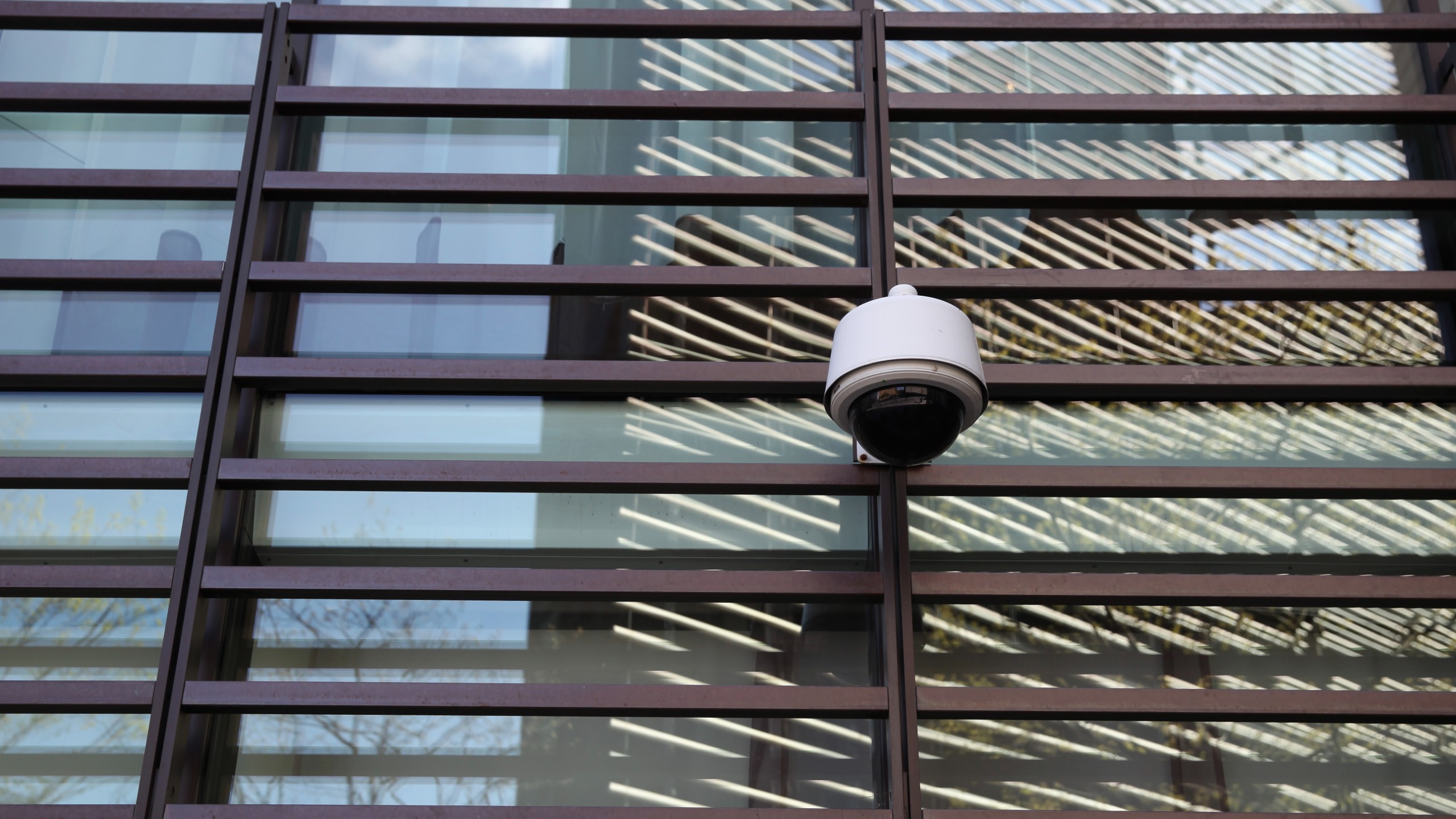
‘Cowboy policing’ - campaigners warn facial recognition firm’s new platform is ‘ripe for wrongful privacy intrusion’
From shop-floor security to national police intelligence at the click of a button
Shoplifting is big business in the UK. It reportedly costs retailers an estimated £2.2 billion a year in direct losses, plus another £1.8 billion spent on crime prevention measures.
To help businesses create a “clear, actionable view of crime” across all their locations, Facewatch - one of the UK’s leading facial recognition firms - has launched a new, free platform that stores CCTV, images, witness statements, and supporting evidence all in one place.
Digital crime management technology is nothing new in retail. What sets this platform apart is the direct pipeline it establishes between shops and the police, combined with the company’s track record of rolling out live facial recognition (LFR) technology.
Leading surveillance researcher Dr Daragh Murray warns that the new Live platform - which is currently in beta trials - could usher in the “normalization of invasive surveillance” and carry significant repercussions if, or when, errors occur.
TechRadar spoke to civil liberties campaigners, academics and the UK’s data protection regulator to find out exactly how Facewatch Live could impact shoppers’ privacy and asked the company what safeguards are in place to prevent its misuse.
‘Build a complete picture of crime’
Facewatch Live is an all-in-one crime management platform that is currently offered to retailers for free. According to the company, the platform “helps retailers record incidents, manage offenders, analyze crime across every location, and share evidence with police from one place."
Retailers that subscribe to the company’s LFR products can request that Facewatch copies “incident reports” and “associated images” of suspected offenders into the Live platform to centralize their data and improve their crime prevention efforts.
However, the company stresses that these are separate platforms and that “no biometric templates are transferred” from one system to the other, according to the product’s privacy policy. In practice, this prevents people’s most sensitive biometric data from being unnecessarily transferred between Facewatch’s platforms and products.
In a recent press release, Nick Fisher, CEO of Facewatch, said that while “retailers can decide” whether to combine the new platform with LFR, feedback from partners “is that the two systems together offer a powerful force against retail crime.” Early adoption, then, suggests that combining LFR with the new platform has been particularly attractive to participating stores.
Facewatch declined to comment on the record to TechRadar about its pricing model, although Fisher previously said in a press release that retailers “should not have to pay simply to understand what is going on in their own businesses, and the process of reporting crime should not come with a price tag.”
Whether the platform integrates LFR or not, one of its main selling points is its role in establishing a direct line of communication with the police for free.
The data-sharing pipeline
Once retailers have collected and uploaded data about suspected offenders, they can use Facewatch Live to manage and build those dossiers over time, before sharing the files directly with the police.
Retailers decide what information is collected, shared and with whom. It may include anything from written witness statements to CCTV footage and it’s up to the retailers who they share this with and why.
What’s more, Facewatch can - at the direction of a participating retailer - share that data directly with the UK’s specialist police intelligence unit, Opal. Opal is the national unit responsible for tackling serious organized acquisitive crime - such as high-level theft, burglary and robbery.
It supports the Home Office, Europol, Interpol and the National Crime Agency and “provides a range of intelligence products to law enforcement agencies,” according to its website.
In Facewatch’s privacy policy, the collaboration between Facewatch and Opal is described as “intelligence sharing to support the prevention and detection of crime. It is not the reporting of a crime to the police.” In practice, then, this means Facewatch Live can turn everyday shop-floor crime management into a potential data source for a national intelligence unit focused on the most serious cases of organized theft.
Facewatch may also share data with local police forces, when directed to by its customers, “if that force has agreed to accept crime reports through Facewatch Live.” It did not disclose which, or how many, police forces are involved when asked by TechRadar.
Given the potential risk of being added to a secretive police watchlist, one would hope there were considerable safeguards and protections in place to prevent misuse or errors. However, Silkie Carlo, Director of UK civil liberties group Big Brother Watch, said “these types of systems are ripe for wrongful privacy intrusion and mistakes.”
“Shoplifting needs law enforcement, but not the cowboy policing by private companies enabled by Facewatch,” she added.
TechRadar asked Opal what measures the unit had put in place to verify the data it received from Facewatch and whether there were any processes aimed at preventing the team from being inundated with poor-quality or inaccurate data from retailers. It did not respond.
Safeguarding data, preventing errors
Whether a retailer uses CCTV, eyewitness accounts, or more advanced forms of surveillance to gather its data, the direct data-sharing link from retailers to law enforcement has raised concerns about its potential to cause real-world harm.
As Dr Murray, Reader in International Law and Human Rights at Queen Mary University of London School of Law, told TechRadar, the platform risks having “concrete impacts on individuals’ ability to freely access public spaces.”
“Future police investigations, and the police’s treatment of particular individuals, may be biased based on the reports of untrained retail staff,” he said.
Carlo, from Big Brother Watch, echoed these concerns, saying: “You could be added to secret watchlists, labelled a criminal, electronically blacklisted from your high street and have your photo shared with police all without your knowledge and with no opportunity to defend yourself.”
Under Facewatch Live’s privacy policy, participating retailers act as “data controllers” - meaning they decide what is uploaded, how long it is kept, and whether records are corrected or deleted.
A Facewatch spokesperson stressed to TechRadar that access to the data is “restricted to users authorised by the retailer” and said that if the “platform suggests a link between incidents, an authorised user must review the underlying records before confirming any link.” Put simply, only certain authorized people are allowed to access the information, and a human has to double-check any links between separate incidents flagged by the system.
They continued: “Anyone who believes a record about them is inaccurate can ask the retailer to correct it. If they contact us, we will help direct their request to the retailer responsible for the record.”
However, fixing errors and removing yourself from databases can be a complex and confusing process, as TechRadar recently found when speaking to people wrongly flagged by the company’s LFR products.
TechRadar asked Frasers Group, a prominent Facewatch partner that lists Sports Direct, House of Fraser and Evans Cycles among its brands, what specific safeguards were in place to prevent misuse. The company did not respond.
NEW: Leave No Trace - A weekly newsletter on digital privacy and online surveillance. Leave No Trace investigates the companies and governments putting our digital freedom at risk - and the people fighting back. 📩 Subscribe now to get every edition delivered to your inbox every Friday.
The future of retail intelligence gathering
There have been significant moves to regulate live facial recognition in recent months. UK Crime and Policing Minister Sarah Jones has promised new legislation to govern LFR and create a code of practice for private sector use. However, it’s unclear whether data collection and sharing platforms that may contain LFR data, like Facewatch Live, will fall under this remit.
There have already been a number of legal obligations governing their use, given that these platforms handle data that poses a high risk to individuals. In a written statement to TechRadar, a spokesperson for the UK’s data protection regulator, the Information Commissioner’s Office (ICO), said: “Organisations developing or introducing new products and services must ensure data protection is built in from the outset, particularly where personal information may be used or shared for policing purposes.”
“Organisations sharing personal information with law enforcement must also ensure that the sharing is necessary and proportionate, identify an appropriate lawful basis and put suitable safeguards in place,” they continued.
In practice, however, broad legal concepts like “necessary and proportionate” are difficult to enforce and leave wide room for interpretation. Facewatch confirmed to TechRadar that all participating retailers must carry out a Data Protection Impact Assessment and that it had completed one itself. However, critics warn that existing mechanisms may be insufficient.
As Queen Mary’s Dr Murray said: “Without any meaningful public debate, or legislative scrutiny, we are moving towards a situation where private companies are deploying pervasive surveillance tools, and then sharing the results of that surveillance with the police.”
As Facewatch Live continues its rollout across British high streets, key questions remain unanswered by the companies and police forces involved - including how retail staff are trained and which forces are accepting reports through the system.
Privacy advocates are calling for an informed public debate on the matter, but until those deploying these tools take the time to respond, that debate remains out of reach.
Sam is VPN Managing Editor at TechRadar. He has worked in the VPN industry since 2018 and has previously written for CNN, Al Jazeera, WIRED, and Deutsche Welle as a freelance journalist. He focuses on VPNs and digital privacy, cybersecurity and internet freedom.
Before joining TechRadar, Sam carried out research on global digital rights issues at Top10VPN. His research has been cited by the United Nations and UK Parliament, as well as publications such as The Guardian, Washington Post and BBC.
You must confirm your public display name before commenting Please logout and then login again, you will then be prompted to enter your display name.
Comments
No comments yet. Start the discussion.