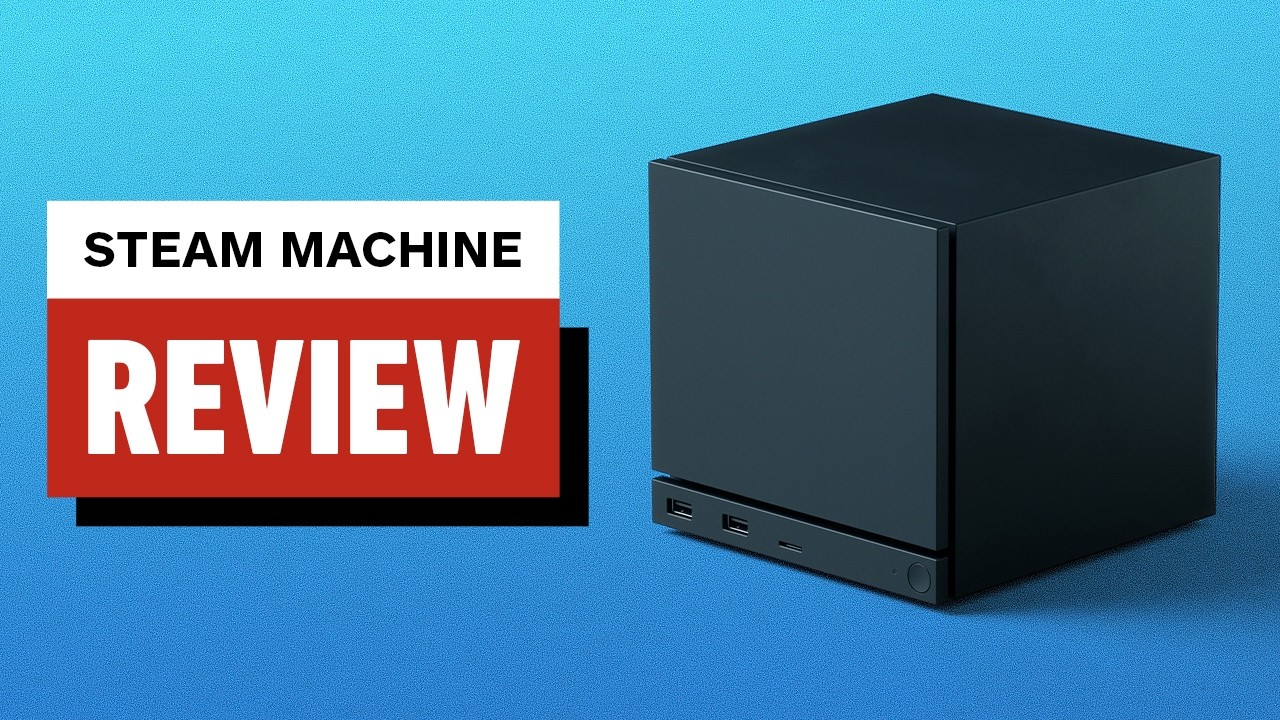
Valve's Steam Machine is here: starts at $1,049 for 512GB or $1,349 for the 2TB version
Pricing and Configurations
After months of delays and growing anxiety about memory prices, Valve has officially confirmed pricing, configurations, and a June 30 launch date for its Steam Machine. The living-room gaming box starts at $1,049 for a 512GB model and climbs to $1,349 for the 2TB version – a significant premium over the sub-$750 figure that had been anticipated when Valve announced the hardware in November 2025. Getting one at launch, however, is far from guaranteed.
Four configurations are available:
- Steam Machine 512GB – $1,049
- Steam Machine 512GB + Steam Controller – $1,128
- Steam Machine 2TB – $1,349
- Steam Machine 2TB + Steam Controller – $1,428
The Steam Controller normally retails at $99.99, making the bundle a mild discount. The 2TB models also include two additional faceplates: red fabric and solid walnut. Valve will also release the CAD files for the external hull so third parties can make their own. Beyond that, Valve's engineers confirmed there are no additional faceplate collaborations planned at launch.
Hardware Specifications
Under the hood, the Steam Machine packs a semi-custom AMD platform:
- 6-core, 12-thread Zen 4 CPU clocked up to 4.86GHz
- RDNA 3 GPU with 28 compute units and 8GB of GDDR6 VRAM running at up to 2.45GHz within a 110W envelope
- 16GB of DDR5 system RAM
- Either 512GB or 2TB of NVMe SSD storage
- A microSD slot for additional expansion
The M.2 SSD is user-replaceable in both 2230 and 2280 form factors; RAM is also swappable, though the compact thermal design makes it more involved than a standard desktop.
For GPU context: 28 RDNA 3 compute units at those clocks is roughly equivalent to a Radeon RX 7600, a capable mid-range card from late 2023, but not where AMD's GPU lineup sits in mid-2026.
Valve's Pricing Justification
Valve didn't soften the message about pricing. The company has directly acknowledged that its original pricing targets are no longer achievable: "our original goal for the price of Steam Machine is no longer viable. So the prices we're sharing today reflect the state of the world for manufacturing; or, more accurately, it reflects the price of the components as we've secured them over the past 6 months."
In an interview with IGN, Valve engineer Pierre-Loup Griffais elaborated on how the team kept the price from climbing even higher, pointing to custom motherboard, power supply, and thermal module designs as the primary levers. "Good engineering doesn't necessarily mean more expensive," said fellow engineer Yazan Aldehayyat. "A big part of engineering is to make sure that the value still makes sense." Griffais added that those cost-reduction choices now look even smarter in hindsight: the custom hardware is "even more competitive for the same parts that you can get off the shelf."
Valve also says that it is selling the Steam Machine at cost – not subsidizing it to gain market share. "The traditional console model is to sell hardware at a loss and make up the revenue with subscription services or by selling games that are locked-in to the hardware. We think this can make sense for a single business in the short term but that open ecosystems are better for customers over the long term."
Reservation Queue and Eligibility
For purchasing the Machine, Valve is running a randomized reservation queue. Starting today and running until June 25, eligible buyers can sign up for whichever SKU they want. Eligibility requires:
- A Steam account in good standing
- At least one Steam purchase made before April 27, 2026
This filter is designed to block freshly created throwaway accounts. One signup per household is enforced using payment method, shipping address, and other account signals. The system is a direct response to the Steam Controller launch in early May, when the $100 gamepad sold out in under 30 minutes and immediately appeared on resale sites at $300 or more.
Performance Expectations
Valve's marketing has leaned heavily on 4K/60 gaming via AMD FSR upscaling, but the engineers are more candid in practice. "1440p is definitely a little bit of a sweet spot," Griffais told IGN. He added that the 4K messaging is partly aimed at less technically savvy buyers, a reassurance that the box will work with their TV, not a guarantee of native 4K performance in demanding titles.
FSR 4 support is confirmed to be coming to the Machine despite its RDNA 3 GPU. Valve also confirmed a new ray tracing driver rolling out in the coming days, along with ongoing optimizations for low-VRAM scenarios. The team framed performance as a moving target: "Performance over time is a little bit of a malleable thing. We're always working on rolling out performance improvements."
Market Positioning
At $1,049 for the base model, the Steam Machine enters a complicated market:
- PS5 Pro: $699
- Base Xbox Series X: $499
- Building a comparable PC from parts (Ryzen 5 7600, RX 7600, 16GB DDR5, 512GB NVMe in a compact case): roughly $700-$900 depending on current component pricing
Those alternatives offer upgradeable graphics hardware. What the Steam Machine offers in return is the SteamOS experience in a polished, purpose-built form.
Valve has also said if you can't get one or find the price too steep, the company is working to bring SteamOS to more third-party hardware (mostly supporting AMD GPUs for now). A Steam Deck 2, for its part, is confirmed to be in development but not imminent. "We're closer than we were the last time we talked," Griffais said, while noting that current handheld chips are still in power envelopes better suited to low-end laptops than true handhelds.
Comments
No comments yet. Start the discussion.