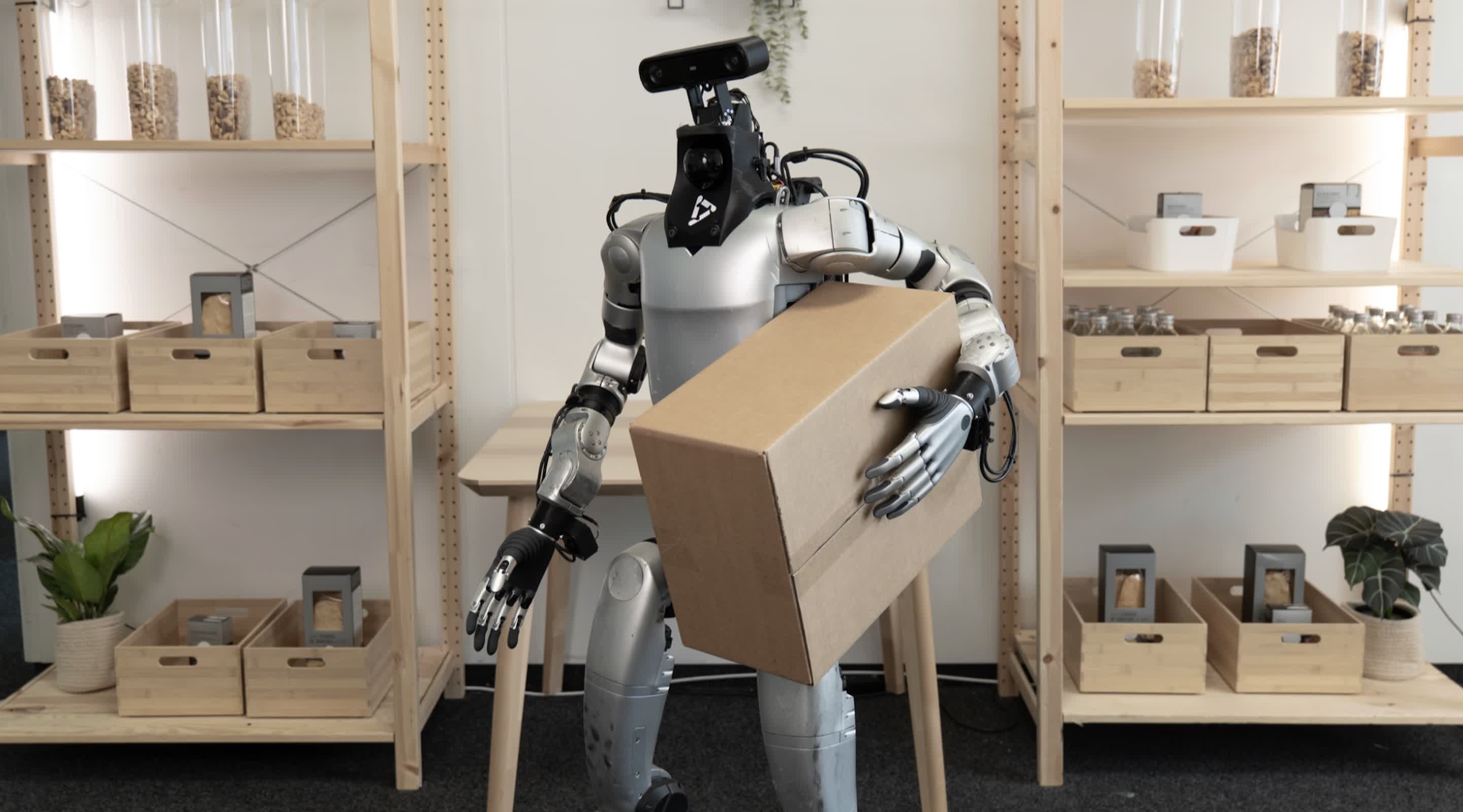
A startup taught humanoid robots to retrieve packages, climb stairs, and unpack boxes – no human steering needed
Flexion Robotics: Teaching Humanoid Robots to Adapt Without Human Steering
Flexion Robotics, a Swiss startup founded by former Nvidia researchers, is approaching the problem from a different angle. It teaches robots basic physical skills and uses a higher-level AI system to decide which skill to call up and when. The goal is not just to complete tasks but to adapt.
The company's humanoid robot can now retrieve packages, climb stairs, and unpack boxes - all without any human steering needed. This represents a significant shift from traditional robotics, where every movement must be explicitly programmed.
The Core Approach
The system works on two levels:
- Low-level skills: Basic physical capabilities like grasping, walking, and balancing are taught to the robot through demonstration and reinforcement learning.
- High-level AI: A separate decision-making system observes the environment and selects which low-level skill to activate at any given moment.
This architecture allows the robot to handle novel situations by combining learned skills in new sequences, rather than requiring a pre-programmed script for every possible scenario.
Technical Implementation
The robots use a combination of:
- Computer vision for environmental awareness
- Proprioceptive sensors for body position tracking
- A neural network-based controller that maps high-level goals to low-level motor commands
- Real-time feedback loops that adjust movements mid-task
The system runs entirely onboard, with no cloud dependency or remote operator. All processing happens on the robot's embedded compute module.
Current Capabilities
In testing, Flexion's humanoid has demonstrated:
- Autonomous package retrieval from shelves at varying heights
- Stair climbing with dynamic balance adjustment
- Unpacking boxes containing mixed items without prior knowledge of contents
- Recovery from minor physical disturbances (pushes, uneven terrain)
The robot operates at human walking speed and can work continuously for approximately four hours on a single battery charge.
Industry Context
Flexion Robotics joins a growing field of companies developing general-purpose humanoid robots. Unlike competitors that focus on end-to-end neural network control, Flexion's modular approach allows each skill to be verified independently before integration. The startup claims this makes their system more reliable for industrial deployment.
The company is currently in pilot programs with three logistics firms in Switzerland and Germany, with plans to expand to manufacturing applications later this year.
Comments
No comments yet. Start the discussion.