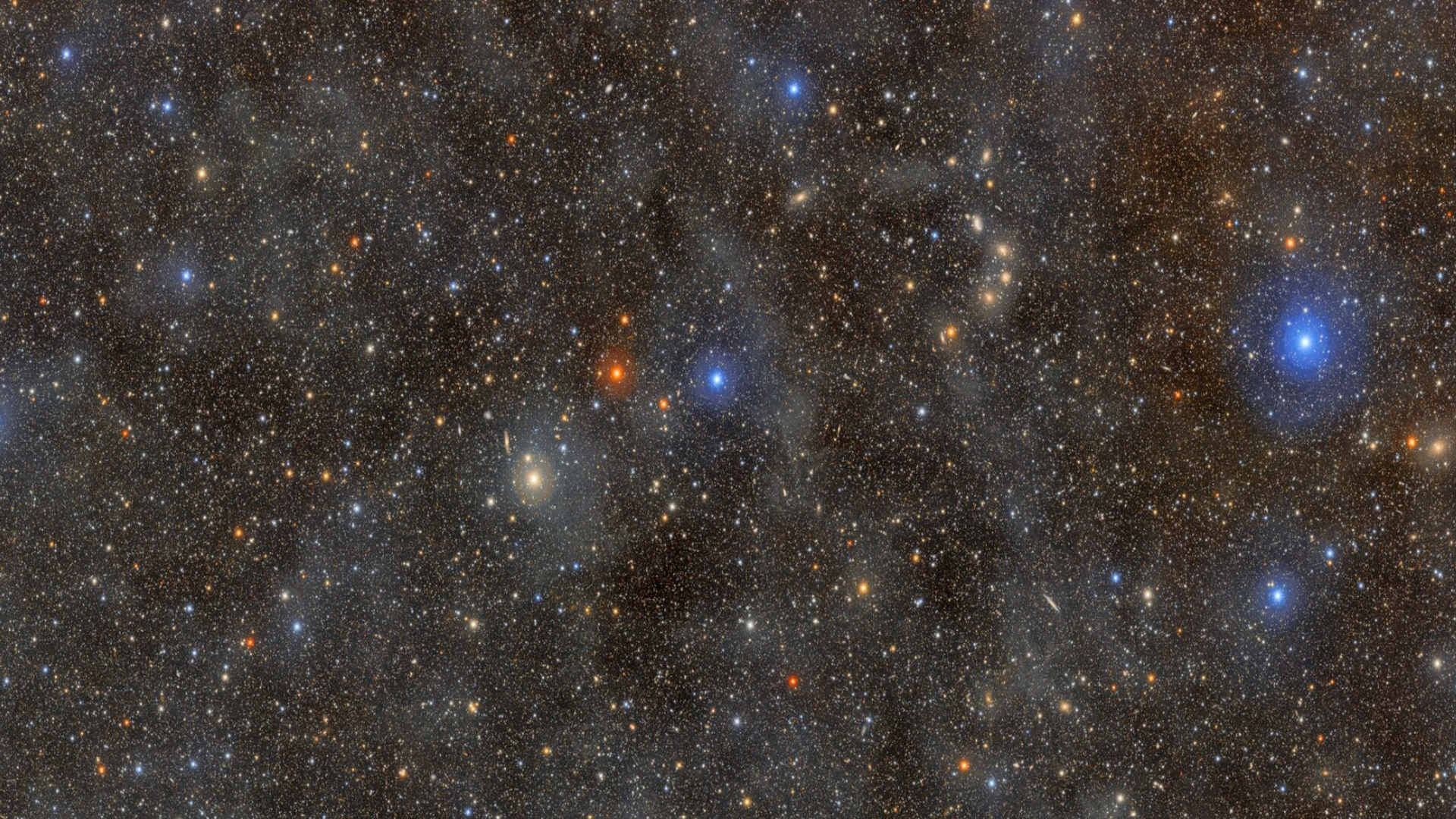
World’s largest digital camera weighs 3 tons and will take 7.88 million photos of the sky over 10 years; each is 8GB in size and has a 3200-megapixel resolution
The world's largest digital camera will repeatedly scan the night sky, creating an unprecedented public archive of billions of astronomical discoveries.
Camera Specifications and Operation
A camera roughly the size of a small car has begun the most ambitious astronomical survey ever attempted from Earth. The Vera C. Rubin Observatory, perched atop Cerro Pachón in northern Chile, officially started its Legacy Survey of Space and Time. Every 40 seconds throughout the night, the 6,600-pound instrument captures a new image using its 3200-megapixel sensor, the largest digital camera ever built.
A Decade-Long Cosmic Recording Begins
Over the coming decade, the camera will return to each patch of sky roughly 800 times, building a living record of celestial change. Željko Ivezić, head of LSST, said the launch followed extensive system optimization and a careful review of technical readiness across multiple performance measures.
"Important factors that played a role in this decision included image quality, effective survey speed, system uptime and reliability, and calibration accuracy," Ivezić said.
The $800 million observatory is jointly funded by the US National Science Foundation and the Department of Energy's Office of Science.
"Today, we begin filming the greatest cosmic movie ever made…This moment reflects decades of vision, innovation and the power of federal investment," said Brian Stone of the US National Science Foundation.
Each night, the camera collects approximately 10 TB of data while generating as many as seven million alerts flagging changes across the sky. During early optimization surveys lasting roughly six weeks, Rubin already discovered more than 11,000 previously unseen asteroids, including 33 near-Earth objects.
Mapping Dark Matter and the Solar System
Scientists intend to use the completed dataset to build a new inventory of the solar system and the Milky Way galaxy. The survey will also help researchers examine dark matter by studying the distorted light of distant background galaxies.
Bob Blum, director of the Rubin Observatory at NSF NOIRLab, said the project follows more than two decades of sustained engineering and scientific effort.
"Rubin Observatory is for everyone; the LSST will change how we do astronomy and astrophysics," Blum said.
Phil Marshall, deputy director of Rubin Operations for SLAC, noted that millions of alerts generated in recent months already demonstrate the system functioning as a genuine discovery machine.
Once complete, the final dataset will contain billions of astronomical objects and trillions of individual measurements, according to the observatory. This data will be released regularly, marking the first time such a comprehensive astronomical archive becomes publicly accessible to researchers and the public alike.
"Rubin is bringing the universe to life, illuminating a treasure trove of discoveries: pulsating stars, supernova explosions, the fossil record of galaxies, clues to the mysteries of dark energy and dark matter, and entirely new phenomena never seen before," the observatory team said.
Comments
No comments yet. Start the discussion.