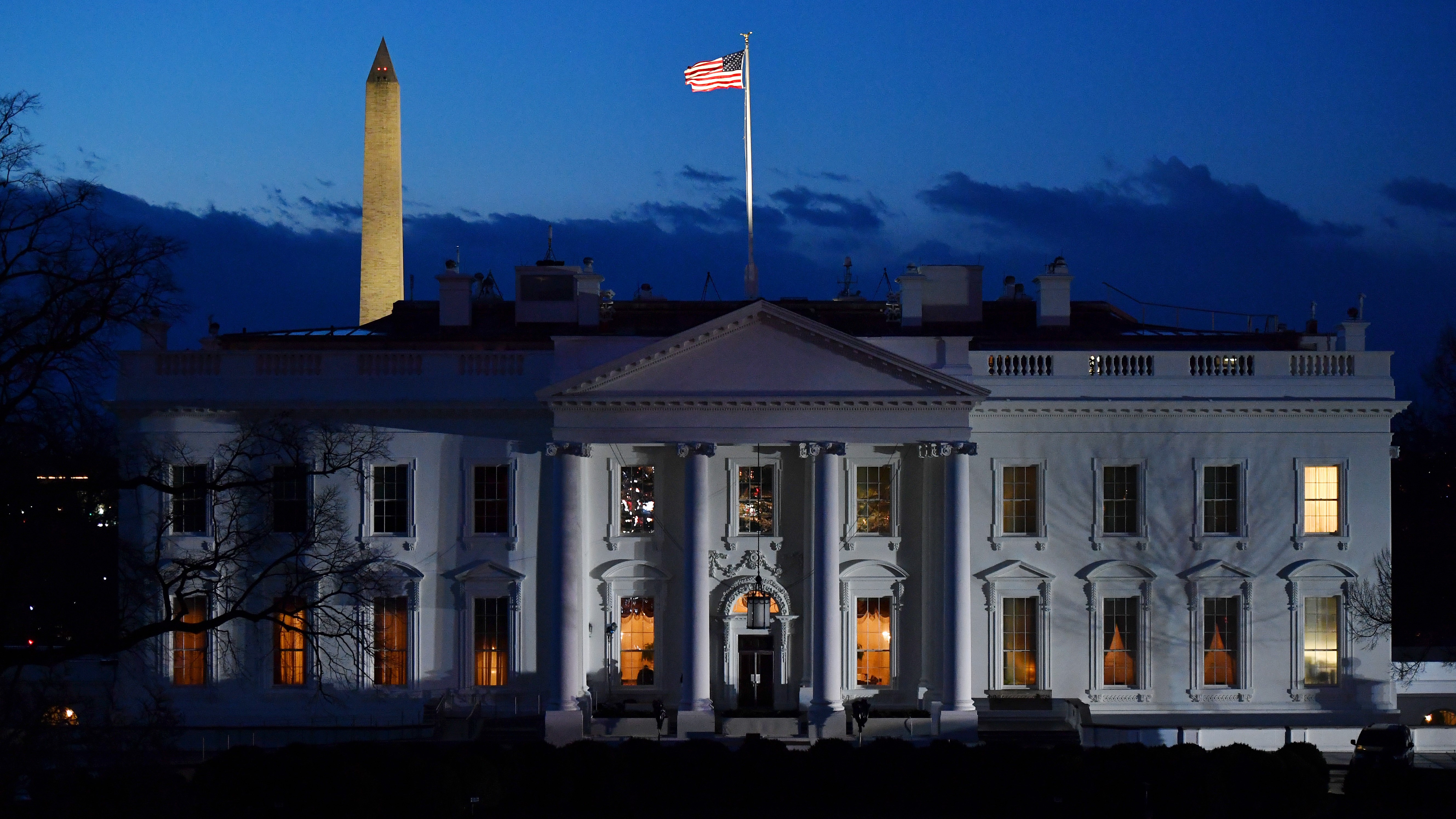
White House wants to shift billions of dollars of research funding away from ‘slow consensus peer review’ and into individual scientists and AI
Moving funding to individual scientists and AI could undermine US scientific credibility at home and abroad.
The White House wants to shift billions of dollars of research funding away from ‘slow consensus peer review’ and into individual scientists and AI. AI should be at the forefront of scientific research, the White House says.
- The White House wants to reallocate hundreds of billions of dollars worth of federal funding away from universities and peer reviewed research panels.
- The funding would instead go to individual scientists and AI-native laboratories.
- The credibility of the plan is undermined by the US government’s track record on science and AI.
The Trump administration has unveiled plans to shift around $200 billion dollars of research funding into individual scientists and a ‘national AI-for-science initiative’. The move would pull funding from university research and ‘slow’ consensus peer review panels in an effort to stay ahead of China, which is making strides to catch up in AI and quantum computing technology.
The ‘Science: A New Golden Age’ report
Plans were laid out in a new report, dubbed ‘Science: A New Golden Age’, presented to Donald Trump by the Assistant to the President and Director of the White House Office of Science and Technology Policy (OSTP), Michael Kratsios.
Peer-reviewed study has been the basis of American research since the end of World War II, but Krastios says that science must again be reinvented in a way “that frees American scientists to do their most groundbreaking work, revives the national pursuit of ambitious scientific missions, and positions the United States to lead the AI-driven scientific revolution that will define the next century.” The report is a suggestion of the direction the Trump administration wants to shape the future of federal funding for science, but the federal funding budget is underwritten by Congress.
The point of peer reviewed research is to prevent research from being performed in an echo chamber, to spot errors and misinformation, and to provide criticism on research methodology and bias. By moving away from peer review and placing funding with individual scientists (likely vetted by the government to provide conclusions that toe the party line), this shift in how academic research is conducted will undermine US scientific credibility both at home and on the global stage.
Genesis Mission and AI in science
The report also suggested providing full funding for the ‘Genesis Mission’, which seeks to unite “National Labs, industry, academia, and more to harness AI for breakthroughs in energy dominance, discovery science, and national security” by creating “AI-native scientific institutions better suited to an era of machine-augmented research.”
There are obviously use-cases for AI in science, but the US government does not have the best track record of using AI for science.
Sign up to the TechRadar Pro newsletter to get all the top news, opinion, features and guidance your business needs to succeed!
The US government has already been previously caught out using AI to create documents presented in hearings, with a research report presented by US health secretary Robert F. Kennedy Jr. being riddled with errors and citing studies that did not exist - a classic case of AI hallucination. Trump has also made significant deviations to the direction of climate science in the US, with peer-reviewed authoritative assessments on the US national climate being deleted from US government websites, the US withdrawal from the Paris Accord, alongside funding and staffing cuts across the National Oceanic and Atmospheric Administration, the Mauna Loa Observatory, and multiple climate monitoring centers.
Energy challenges for AI data centers
In order to maintain the forefront of AI development, the US is also experiencing a mass-buildout of AI data centers to provide capacity for usage, training, and development of frontier models. But this has presented a major challenge in providing enough power to sites already running, as well as planned sites that will require multi-gigawatt connections.
Trump has encouraged AI companies and data center developers to lean into fossil fuels to provide extra energy capacity, with many AI campuses deploying natural gas burning turbines. Some of these sites operate at noise levels matching an international airport 24 hours a day, seven days a week, with local residents reporting illnesses and symptoms such as dizziness, nausea, vertigo, and sleep disruption as a result of the infrasound emitting from turbines.
Follow TechRadar on Google News and add us as a preferred source to get our expert news, reviews, and opinion in your feeds.
Benedict is a Senior Security Writer at TechRadar Pro, where he has specialized in covering the intersection of geopolitics, cyber-warfare, and business security. Benedict provides detailed analysis on state-sponsored threat actors, APT groups, and the protection of critical national infrastructure, with his reporting bridging the gap between technical threat intelligence and B2B security strategy. Benedict holds an MA (Distinction) in Security, Intelligence, and Diplomacy from the University of Buckingham Centre for Security and Intelligence Studies (BUCSIS), with his specialization providing him with a robust academic framework for deconstructing complex international conflicts and intelligence operations, and the ability to translate intricate security data into actionable insights.
Comments
No comments yet. Start the discussion.