20 years of Intel Macs: Why Apple switched, and why it switched again
Remembering the ups and downs of the Intel Mac era as it finally winds down.
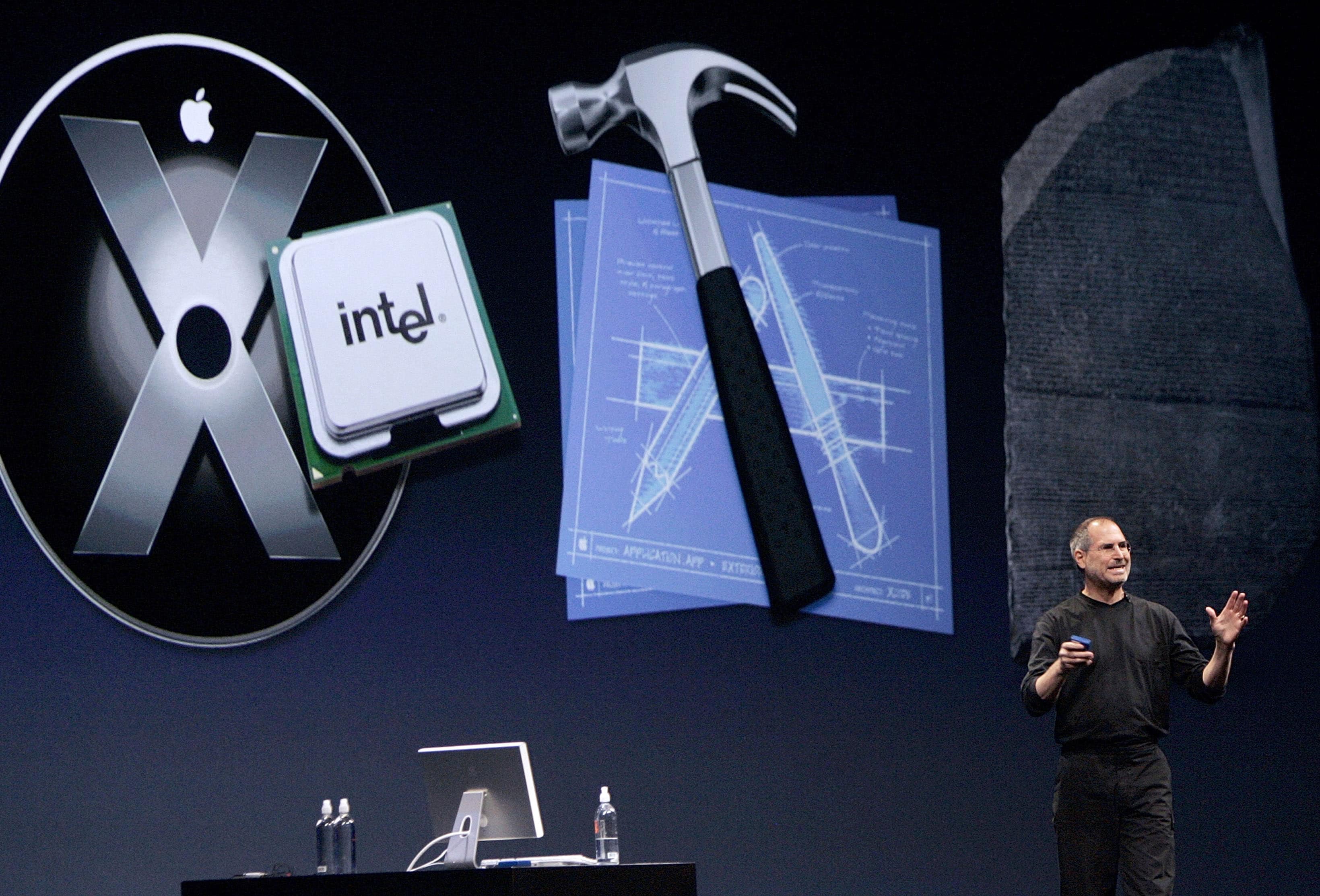
The release of macOS 27 later this fall won’t quite close the book on the Intel Mac. The last handful of models that could run macOS 26 Tahoe will be eligible for security and Safari updates for two more years, and elements of the Rosetta compatibility layer for running Intel code on Apple Silicon Macs will be with us in some form for some indeterminate amount of time after that. But macOS 26 is definitely the last chapter of the Intel Mac story. Anything that happens after this is a coda or an epilogue. Most of our WWDC coverage has been forward-looking, so indulge us if you will in a look backward at the full history of the Intel Mac, a partnership between two companies that made Macs dramatically better, until it started making them worse. “Project Marklar” The Mac’s history with Intel didn’t start with version 10.4.4, the first Mac OS X version to ship on a commercially available Intel Mac. But we won’t go as far back as the x86-compatible versions of NeXTSTEP or Apple’s abortive ’90s efforts to make a version of classic Mac OS that could be licensed for third-party x86-based systems. Let’s begin with JK Scheinberg, an Apple engineer in June of 2000, who was looking for a solo project to help him transition to working from home. His pitch? A version of the then-still-in-progress Mac OS X that could run on Intel processors. “I’ve been working on the Intel platform for the last week getting continuations working,” Scheinberg wrote to his boss in an email shared by his wife. “I’ve found it interesting and enjoyable, and, if this (an Intel version) is something that could be important to us I’d like to discuss working on it full-time.” At the time, all Macs still used PowerPC processors co-developed by Apple, IBM, and Motorola, as they had since 1994. Early Mac OS X versions ran on G3 and G4 chips, and the 64-bit G5 processor was launched in mid-2003. A version of Mac OS X that ran on Intel’s chips wasn’t strictly necessary, and for around a year and a half, it existed only as a sort of hobbyist side project codenamed “Marklar.”
Comments
No comments yet. Start the discussion.