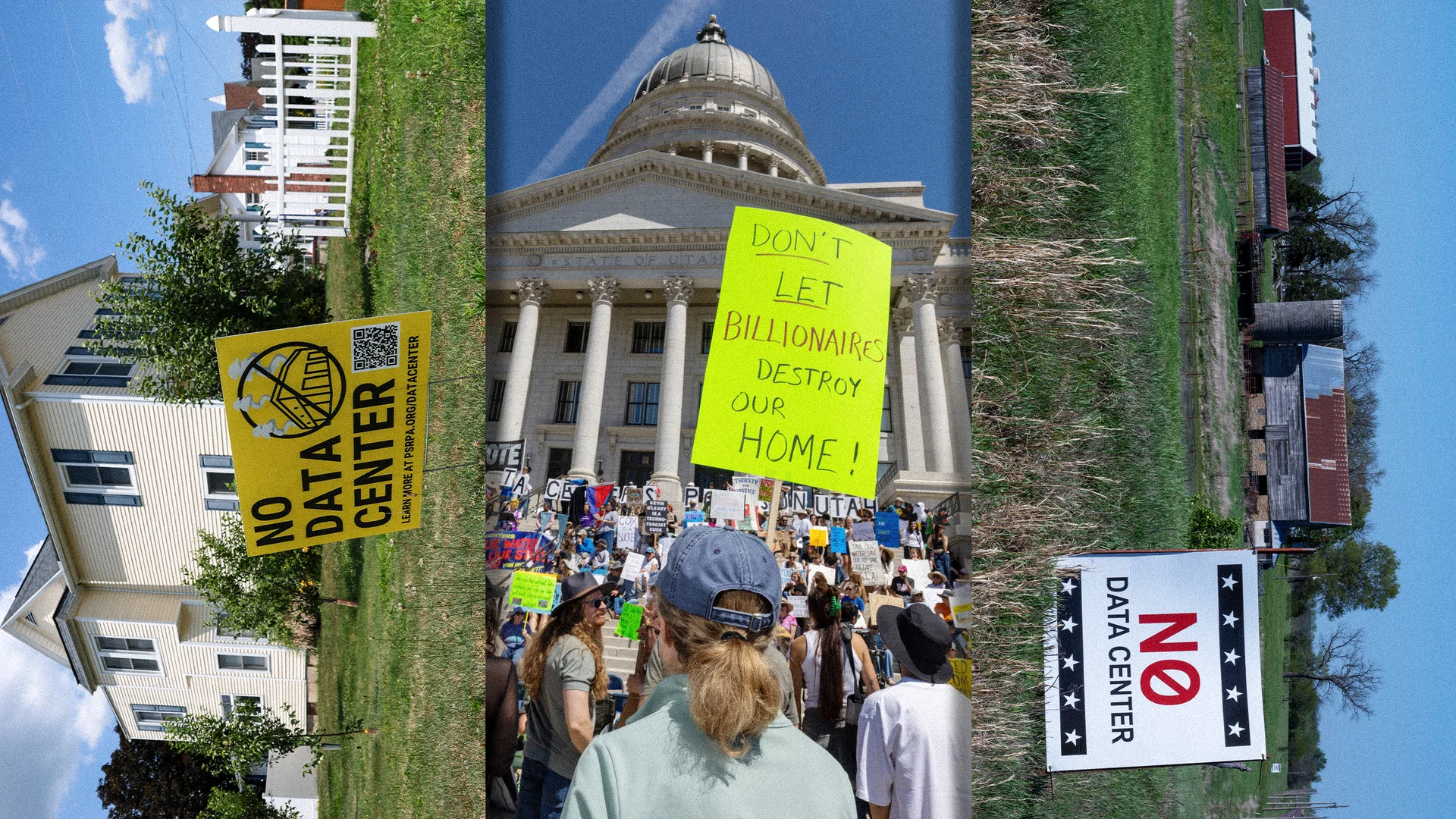
The data center backlash is spreading across the country
New York Leads with One-Year Ban
New York just became the first state to enact a one-year ban on large new data centers while the state government scrambles to develop regulations addressing challenges like energy demand and water use.
“As data center development threatens to hike up utility bills, deplete our natural resources, and create uncertainty for New Yorkers, it’s my responsibility to take action and lead,” Governor Kathy Hochul said when she announced the executive order, which applies to data centers 50 megawatts (MW) and larger. Hochul also said that she wants to repeal tax exemptions for large data centers.
New York is far from alone: Across the U.S., states and cities are taking a range of steps-from ratepayer protection laws to zoning restrictions, moratoriums, and permanent bans-as opposition to data centers grows. Here’s a snapshot:
Arizona
Under a new ratepayer protection law, state regulators will create rules so data center grid costs won’t be passed to other customers. The state also passed a three-year pause on data center applications for sales tax exemptions. Tucson is working on a new zoning restriction for large data centers.
California
While many cities and counties across the country have paused data center development, the L.A.-area city of Monterey Park was the first to permanently ban new construction. No statewide moratorium is under consideration yet.
Florida
A new state law requires data centers to pay their full cost of service and stops utilities from passing data center costs to other customers. Sarasota County has a moratorium in place to stop new large data centers.
Georgia
Though a statewide moratorium failed this year, 11 counties have moratoriums in place on data center construction.
Illinois
A state bill would make data centers cover their own costs and boost clean energy use while limiting water consumption. Two counties and two municipalities have moratoriums in place.
Iowa
Five counties have enacted moratoriums on data center construction. Linn County created strict new zoning rules, including 1,000-foot residential setbacks and detailed water studies.
Indiana
Seven counties have moratoriums in place. Indianapolis’s city council just voted to recommend a moratorium on approving new data centers, and another city is poised to vote on a moratorium.
Maine
A statewide data center moratorium passed the legislature, but was vetoed by the governor. Another new law excludes data centers from state tax incentives. Six cities have moratoriums.
Maryland
Four counties have moratoriums in place, along with the city of Baltimore, which is pausing construction for a year while it works on an impact study.
Michigan
Twenty-seven towns and cities and 12 counties have moratoriums on new data centers, ranging from months to a year. A bipartisan statewide bill is moving through the legislature, but the governor has said she won’t sign it.
Minnesota
Minneapolis, along with two other cities, has a moratorium in place on large data center development. A state law restricts data centers to industrial districts. A statewide moratorium was proposed but didn’t pass.
New Jersey
A new law requires regulators to create a new electric rate for large data centers, make data centers pay for electric upgrades, and require operators to reduce or shift energy use when demand is high. Three counties have banned data centers.
New York
Before Hochul’s executive order, the state legislature passed a bill that would impose a one-year moratorium on new data centers of 20 MW or larger-a broader threshold than the executive order. Hochul hasn’t yet signed or vetoed the bill. Two towns have moratoriums in place.
Oklahoma
A new state law requires large utility customers to cover their cost of service. Both Oklahoma City and Tulsa have moratoriums in place, though a preapproved Meta project in Tulsa was allowed to move forward. A state moratorium stalled.
Virginia
The town of Warrenton, where Amazon had proposed a 220,000-square-foot data center, enacted a permanent ban on data centers. Two other counties enacted new zoning restrictions. In 2025, state regulators created a new utility rate tier for large users like data centers, requiring them to sign contracts to cover their majority of their costs on the electric grid. The legislature is considering a statewide moratorium.
Washington
A new state law requires data centers to meet the same strict clean energy requirements as utilities. A bill with more regulations, opposed by Microsoft and other tech companies in the state, failed. In Seattle, the city council temporarily froze new siting for large data centers that require uninterruptible power, giving the city time to conduct impact studies. Spokane also has a moratorium in place.
Wisconsin
The state legislature considered, but did not pass, a ratepayer protection bill and a moratorium. Five local governments have moratoriums in place; the town of Port Washington, near Milwaukee, was the first in the country to pass an outright ban through a referendum.
Approval Problems
Several other states have local moratoriums in place, from Missouri to North Carolina. (This map tracks the changes across the country.) Others are moving in the other direction-New Hampshire, for example, passed a law stopping local governments from specifically restricting data centers versus other businesses.
But even in places without new rules, data centers are struggling to get local approval. Data Center Watch, a group tracking opposition, reported that in the first quarter of this year, 75 data center projects collectively worth $130 billion were stopped or delayed. That’s about the same number as were blocked in all of 2025.
Comments
No comments yet. Start the discussion.