Hacker hijacks Brazil’s national alert system, sending “misanthropy” to millions of phones
Hacker hijacks Brazil’s national alert system, sending “misanthropy” to millions of phones
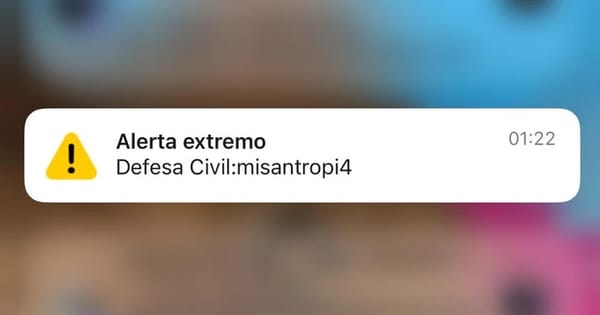
Picture the scene. You're in bed fast asleep, when suddenly your phone erupts with a blaring emergency siren. You grab the phone. It's a flood warning for your region. Except where the details should be, every field just reads "misantropi4."
That was the experience for millions of Brazilians in the early hours of Saturday, 20 June 2026. Somebody had broken into Brazil's national Civil Defence alert system and used it to send fake "Extreme Alert" notifications - the most severe category, normally reserved for warnings of imminent natural disasters - to mobile phones across at least five states, including São Paulo, Rio de Janeiro, and the Federal District.
In case you were wondering, "misantropia" translates to "misanthropy": hatred or aversion to humanity.
Timeline of the attack
The first unauthorised alert was blasted out at around 11:40 pm on June 19 in Paraná. Over the next couple of hours, ten fake alerts were sent:
- Nine via Cell Broadcast (which bypasses silent mode and overrides whatever is on a smartphone user's screen)
- One via SMS
Each state civil defence agency was quick to confirm that none of its own people had pressed any buttons, and that there was nothing going on that would actually warrant an extreme alert.
Response and investigation
In a statement posted on social media, Brazil's National Civil Defence confirmed that it had pulled the alert platform offline at 1:30am following the compromise. Officials said there was no evidence of "structural damage" to the infrastructure, but have been unable to confirm just how many devices were actually hit.
National Secretary of Protection and Civil Defence Wolnei Wolff confirmed that the attackers managed to regain access after an initial attempt to block them from accessing the system. No suspects have been positively identified so far.
Background and implications
Brazil's Cell Broadcast system was introduced in the last couple of years, and only expanded to cover the entire country in October 2025.
Thankfully, no dangerous instructions accompanied the alerts. If the public had, for instance, been told to evacuate or visit a malicious webpage then things could undoubtedly have been worse. The biggest loss was an interrupted night's sleep for many people.
But the damage to trust is real. Emergency alert systems work because people believe them. Every time one of these systems issues a false alert - whether through negligence or a deliberate attack - trust erodes. The risk is that next time there is a genuine flood warning or landslide alert, some people will roll over and go back to sleep, assuming it is another hacker with a grudge against humanity.
Comments
No comments yet. Start the discussion.