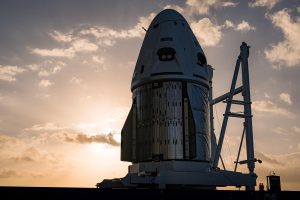
A "disaster waiting to happen"? Industry officials worry about Crew Dragon availability.
A "disaster waiting to happen"? Industry officials worry about Crew Dragon availability
"It's very clear that in the United States there is a big need for an additional crew vehicle."
NASA breathed a deep sigh of relief six years ago when SpaceX launched two astronauts, Doug Hurley and Bob Behnken, on a successful mission to the International Space Station. With the safe landing of Crew Dragon, the US space agency broke a nearly decade-long gap in its ability to put humans into orbit.
Through its Commercial Crew program and multibillion-dollar contracts awarded in 2014, NASA had hoped to foster two providers of low-Earth orbit transportation, SpaceX and Boeing. However, Boeing has yet to complete a successful crewed test flight-a perilous 2024 test flight by Boeing's Starliner was later declared a Type A mishap-and probably won't fly another crewed mission before 2028.
With the International Space Station slated for retirement in the early 2030s, NASA is partnering with several US companies to develop private space stations. As part of that effort, the private companies will have to work with NASA to determine how they will transport astronauts to and from their space stations, some of which could launch as soon as 2030. And it turns out this is more difficult than it sounds.
Crew Dragon the default, but…
The key players in the effort to build private space stations are Axiom Space, Vast Space, Voyager, Blue Origin, and possibly SpaceX. Of these companies, Axiom Space has previously worked with SpaceX to fly private astronauts on Crew Dragon to the space station, and Vast Space will use Dragon to support its early space stations. SpaceX is likely planning to use its Starship vehicle as a potential space station, if it decides to enter the NASA competition.
Comments
No comments yet. Start the discussion.